


Footwear
Footwear in Bohemia in the second half of the 15th century can be divided into low, mid-height and tall. Shoes were most commonly made of leather by sewing the sole to the upper and then turning the shoe inside out (so-called turnshoe construction). A strip of leather, called a welt, was inserted between the sole and the upper. The aim of constructing a medieval shoe was to hide all important seams inside. While in Germany the fashion for round-toed shoes was already beginning — a trend that would culminate in the first half of the 16th century with shoes called "cow's mouth" — in Bohemia, a conservative moderate pointed toe was still maintained at the beginning of the 16th century.
Alongside this moderate point, the long beaks once worn a century earlier on shoes of the poulaine type reappeared in Prague in the 1460s. On 2 September 1464 George of Poděbrady ordered the burgomasters and councils of all three Prague towns: “Přikazujem vám, abyste všem ševcuom přikázali, aby špicuov u třevíc i u škoren nedělali, a také žádnému svému nedopúštějte v špici choditi; v tom naši vuoli naplníte.”(We command you to order all shoemakers not to make points on shoes or boots, and not to allow any of your people to walk about in points; in this you will fulfil our will.) Tomek adds from the Prague town books that “za času krále Jiřího smyslili si ševci Pražští dělati zase střevíce a škorně špičaté jako kdysi o sto let předtím” (in the time of King George the Prague shoemakers took it into their heads to make pointed shoes and boots again, as a hundred years before), and judges that the ban “nejspíš mělo svůj účinek” (most likely had its effect) . The long beaks thus returned to Bohemia only briefly; thirteen years later, in 1477, the Old Town councillors, settling a dispute among the shoemakers, already describe a different trend – “obuv dělala nižší a škorně jezdecké ostřejší než jindy” (footwear was being made lower and riding boots sharper than before).
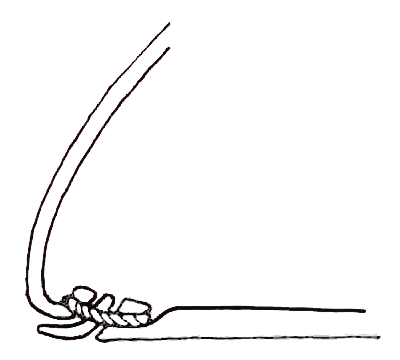
Method of sewing the upper to the sole in the 15th century (Goubitz).
In addition to the upper, the sole and the welt, a shoe generally contained several more parts — a heel stiffener, a binding, and some variant of fastening or lacing.
In the Prague towns the shoemaker's trade was divided in two: the novinníci, who made new footwear, and the vetešníci, who repaired it. Where exactly the line ran was pronounced on 12 July 1441 by the councillors of all three towns: the repairers “nové nártie a podešvy nové k starým ochozeným holenom budú moci přišívati a dvoje škorně dobře ochozené do krámu na prodaj každý trh vykládati, jakož jich práva svědčie, ale červených ani bielých šáróv k vetché obuvi nemají okládati”(may sew new vamps and new soles onto old worn-down boot legs and put out two pairs of well-worn boots for sale in the shop every market day, as their rights attest, but they must not fit red or white šáry onto old footwear). This shows what wore out first on a boot – the vamp and the sole – and what a customer had made only new: the coloured šáry, that is the boot legs. The New Town councillors renewed the ruling in 1456 and added the condition that whoever wished to settle as a master in either trade must agree with the community “ve věcech slavné svátosti těla a krve pána našeho Jhesu Crista pod obojím způsobem” (in matters of the glorious sacrament of the body and blood of our Lord Jesus Christ under both kinds).
The shoemakers greased and blackened the leather themselves. When they quarrelled in 1453 with the tanners of Podskalí and Vyšehrad, the tanner Jakub Kavka testified that “obojí koželuzi nemazali … ale byli štumfaři; potom se srotili ševci, a tak počali mazati, a tak štumfařské řemeslo sešlo” (neither group of tanners greased … they were štumfaři; then the shoemakers banded together and began to grease, and so the trade of the štumfaři died out), and the shoemakers Beneš and Mařík Lichva confirmed that the tanners had “naučili mazati od tovařišuov ševcovských zlehka od čtyřidceti let” (learned to grease from shoemakers' journeymen some forty years ago).
Overlap Fastening
Overlap fastening means that a part of the leather on the upper overlaps the open section of the shoe and is fastened at the side with a button or buckle. Its function is very similar to flap fastening; however, the main difference is that the flap is sewn onto the shoe separately. Nevertheless, it is not easy to distinguish these two types in finds and depictions, and they often merge together. This type of fastening was most popular between the 8th and 13th centuries; by the 15th century it appeared only very sporadically (e.g. a find from Fribourg in Switzerland, where the overlap is fitted with two straps that fasten at the ankles using two buckles).
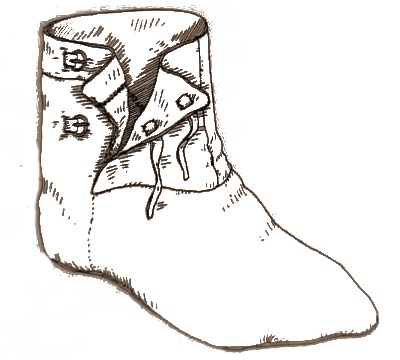
Criblet, Fribourg, Switzerland. A shoe with overlap fastening and buckles. 14th–15th century (Volken & Bourgarel 2001).
Fold Fastening
The principle of fastening is very similar to overlap fastening, but the shoe completely lacks an open section on the instep. Instead, there is a large fold that is fastened at the side using buttons, buckles or hooks. This type of fastening was very popular in the 14th, 15th and 16th centuries, especially for tall boots.
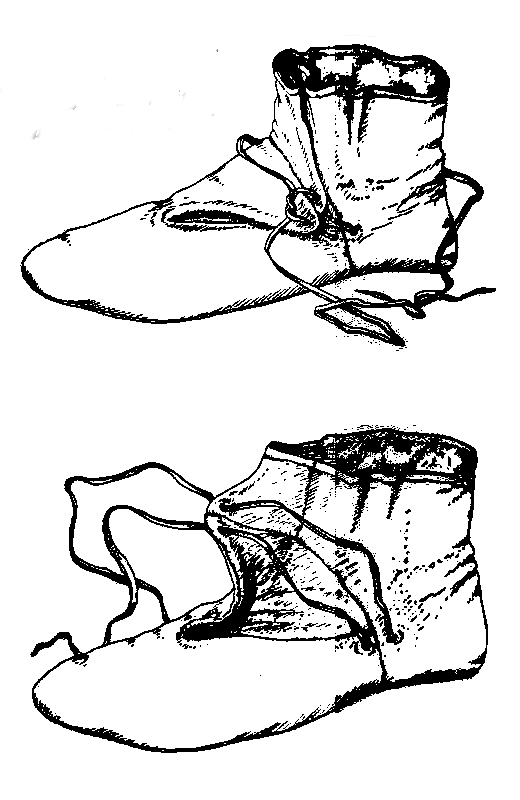
Dordrecht, Netherlands. An ankle boot with a fold fastening, shown unfastened and fastened. 15th century. (Goubitz)
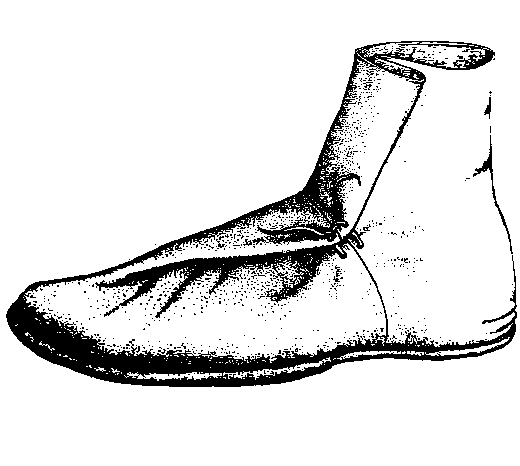
Vevey, Switzerland. A boot with fold fastening. 14th–15th century. (Goubitz)
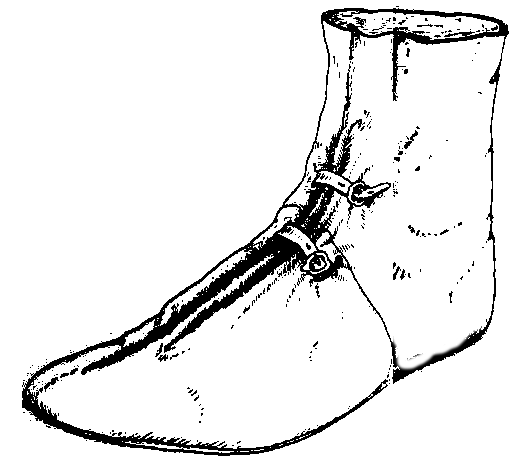
Coventry, England, 15th century. (Goubitz)
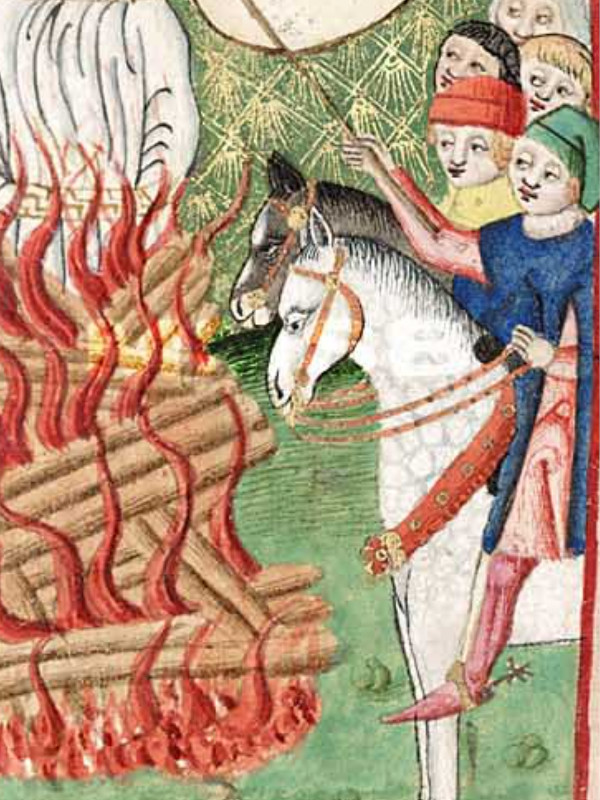
A tall riding boot with fold fastening, excerpt from the Codex of Jena (1490-1510).
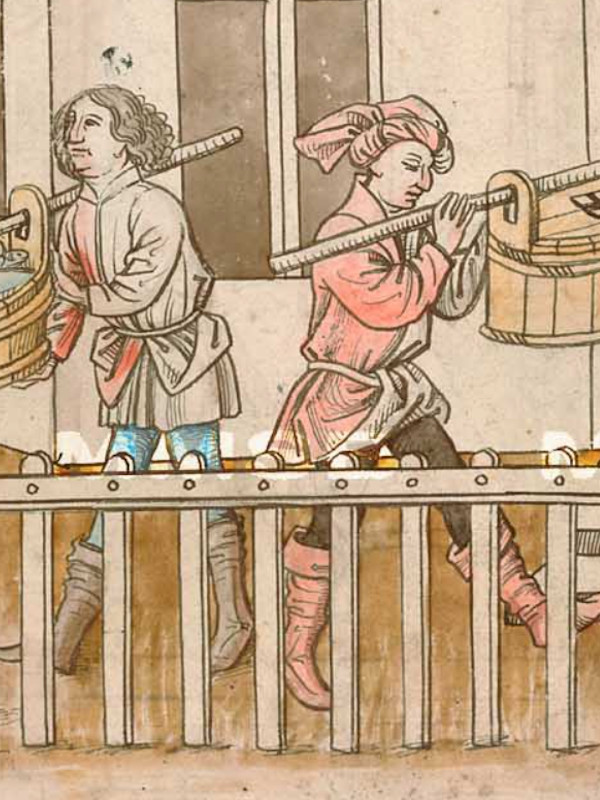
A tall riding boot with fold fastening, excerpt from the Richental Chronicle (1470-1480).
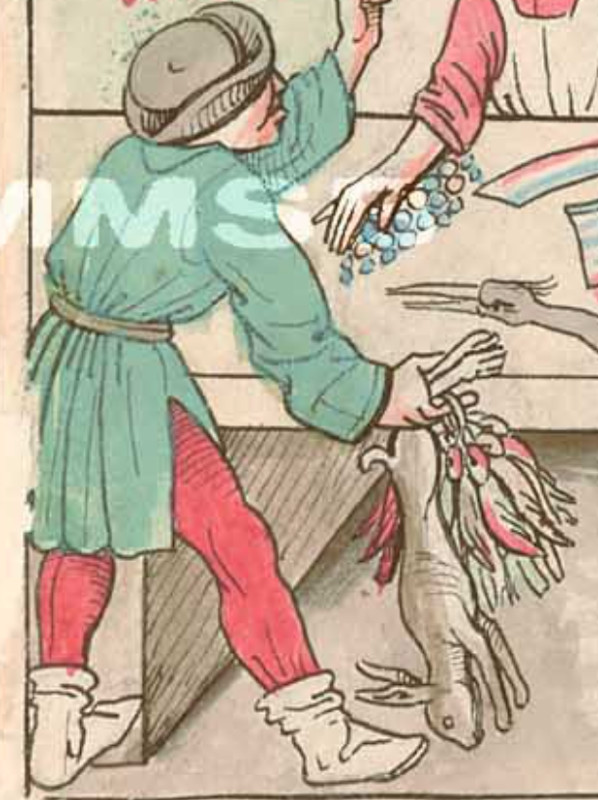
An ankle boot with fold fastening, excerpt from the Richental Chronicle (1470-1480).
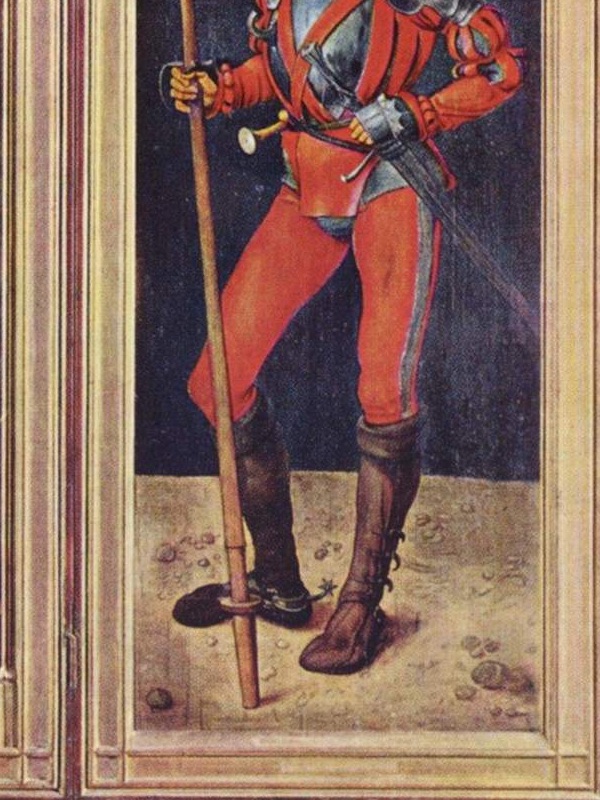
A tall riding boot with fold fastening, excerpt from the Paumgartner Altarpiece (1500).
Instep Strap Fastening on Open Shoes
This type of fastening is found on low, open shoes from the 14th to the 16th century. It is characterised by a strap that runs across the instep and is fastened with a button, buckle, or tied in a knot.
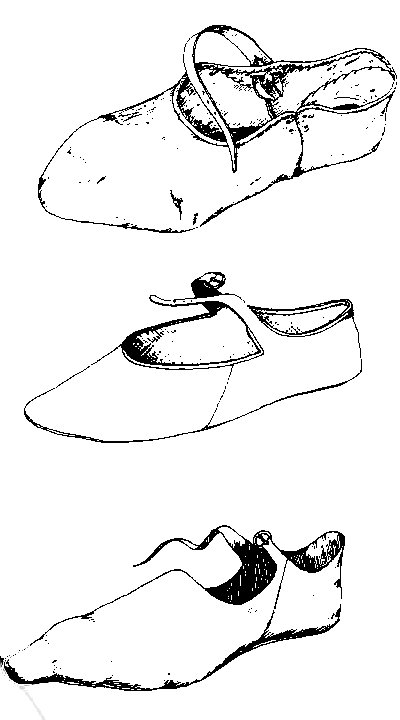
Three examples of shoes with an instep strap fastened with a buckle from the 15th century.
Top: Dordrecht, Netherlands. (Goubitz, 2001)
Middle: Schleswig, Germany. (Schnack, 1992)
Bottom: London, England. (Grew & De Neergaard, 1988)
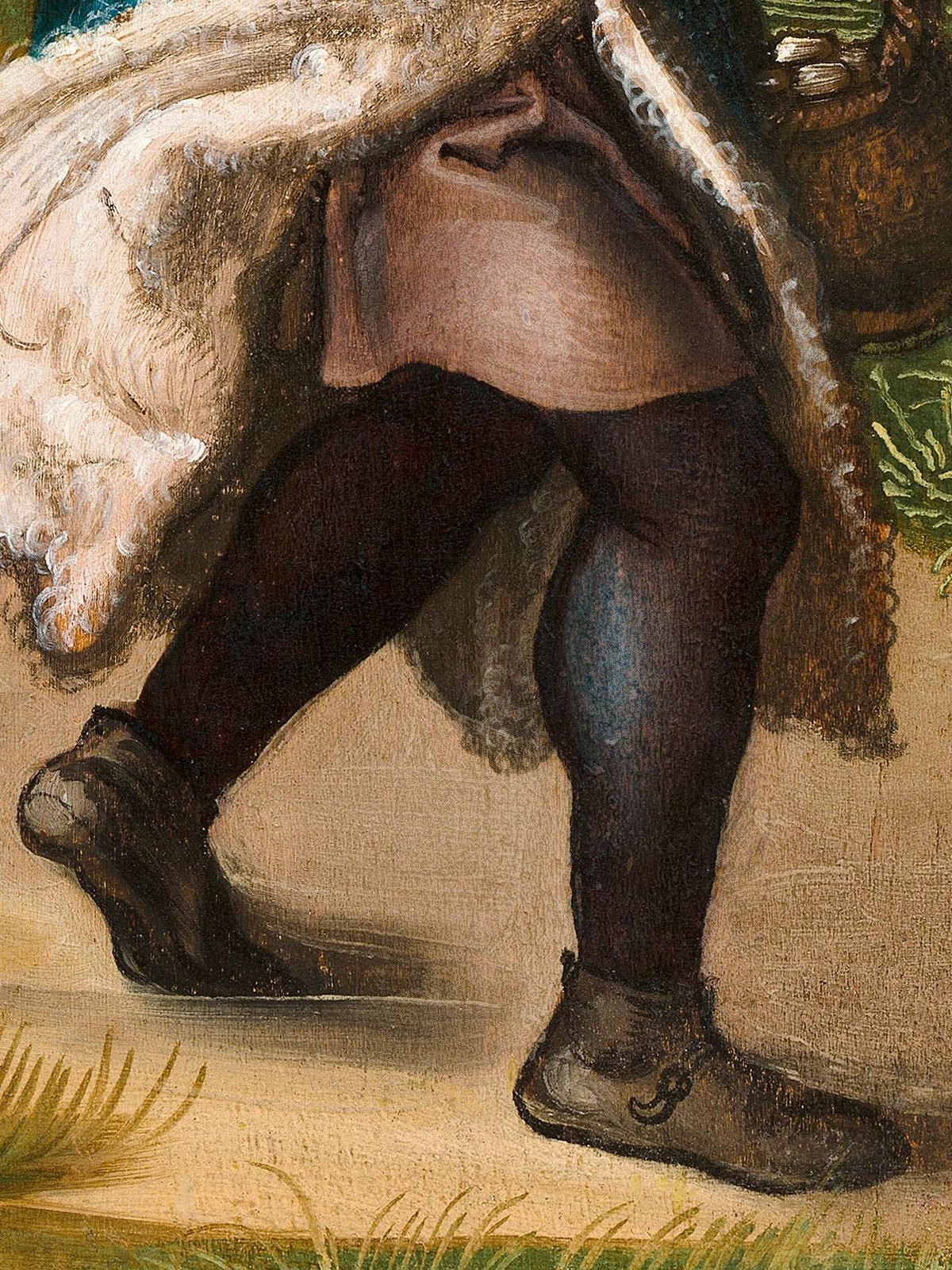
This ankle boot does not exactly correspond to the described type, as it is not an open shoe, but the principle of fastening with an instep strap with a buckle is clearly visible here. The excerpt comes from Albrecht Dürer's painting Lot and His Daughters (1496-1499).
Side Lacing
This type has a slit on the side of the shoe, which is laced using a cord or leather strap. It is found on low and ankle-height shoes from the 13th to the 15th century. It can be combined with instep strap fastening.
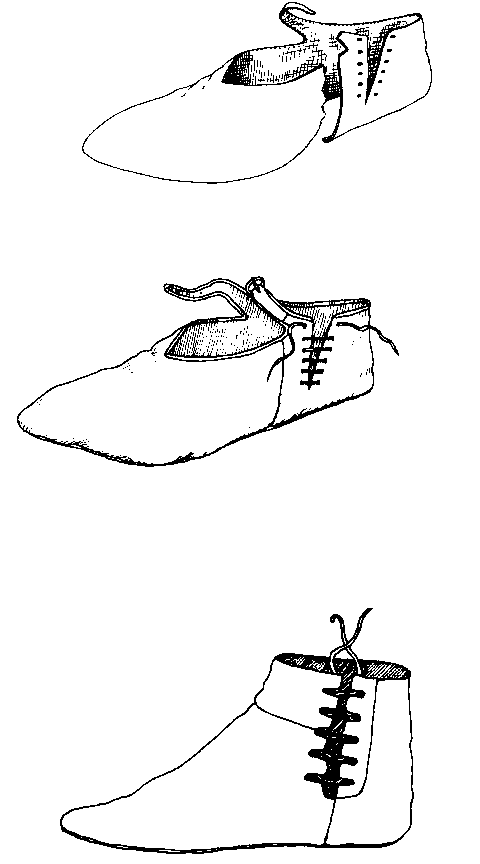
Top: Dordrecht, Netherlands. A very unusual model with side lacing and an instep strap with a buckle. Late Middle Ages. (Goubitz)
Bottom: Oslo, Norway. A boot with lacing loops. Late Middle Ages. (Schia, 1977)
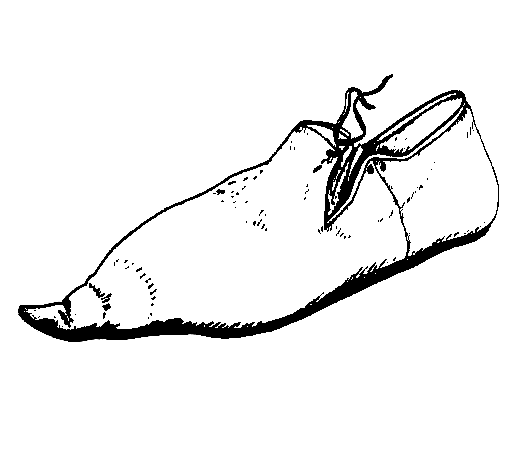
Oud-Turnhout, Belgium. A shoe with diagonal side lacing. 15th century. (Goubitz)
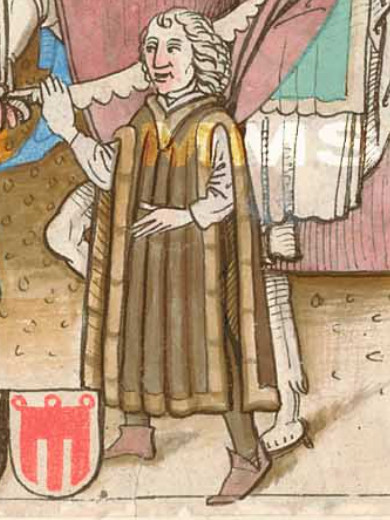
A shoe with side lacing in an excerpt from the Richental Chronicle (1470-1480).
Laces
This type of footwear has one, two or three pairs of holes on the front, through which a lace was threaded, similarly to a doublet. Some pieces, however, may have been laced with a single long lace, which is similar to modern footwear. The finds are generally dated between 1350 and 1530.
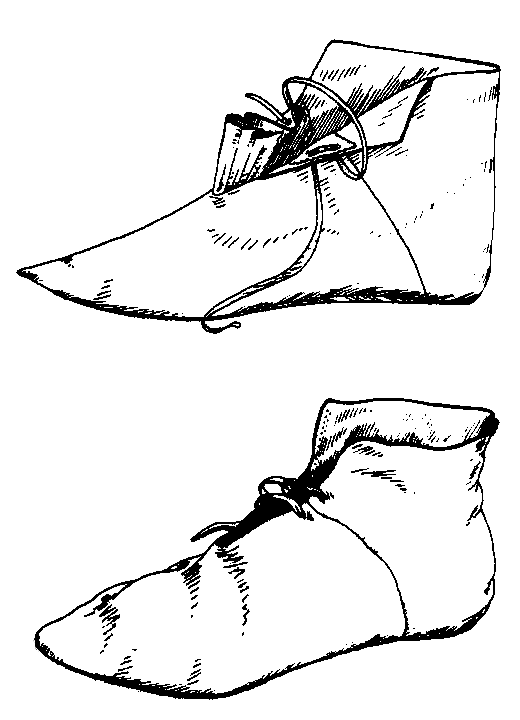
Top: Dordrecht, Netherlands. A boot with a tongue, through which laces pass on both sides. 14th century. (Goubitz)
Bottom: Delft, Netherlands. A boot with two side seams and one rear seam. The tongue is missing. 15th century. (Goubitz)
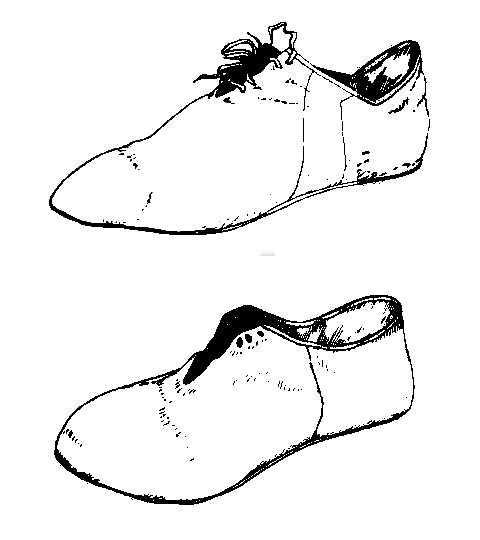
Top: Dordrecht, Netherlands. A shoe with pairs of laces. Late Middle Ages. (Goubitz)
Bottom: Dordrecht, Netherlands. A shoe with three pairs of holes for a single through-lace, as we know it today. Late Middle Ages. (Goubitz)
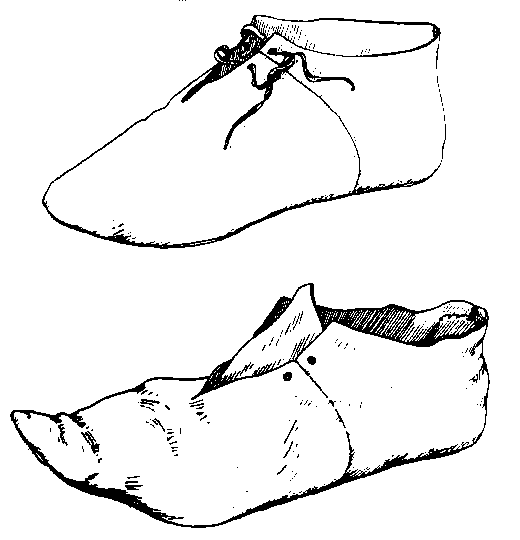
Top: Tiel, Netherlands. An ankle boot with curved side seams. Late Middle Ages. (Goubitz)
Bottom: Delft, Netherlands. A shoe with a fashionable pointed toe and a diagonal heel seam. Late Middle Ages. (Goubitz)
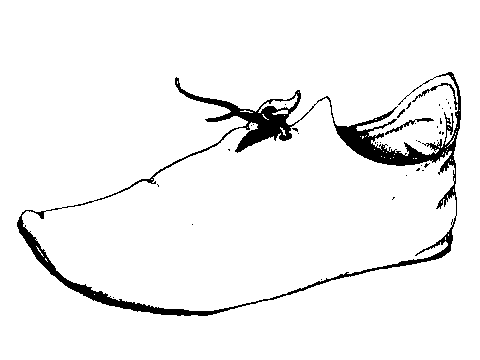
Bolsward, Netherlands. A fashionably cut shoe with one pair of lace holes. Late Middle Ages. (Goubitz)
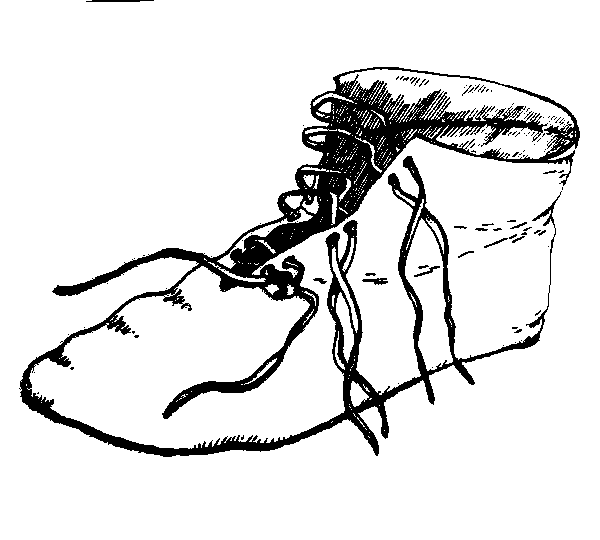
Leiden, Netherlands. A boot with laces tied in pairs, similarly to doublets. 15th century. (Goubitz)
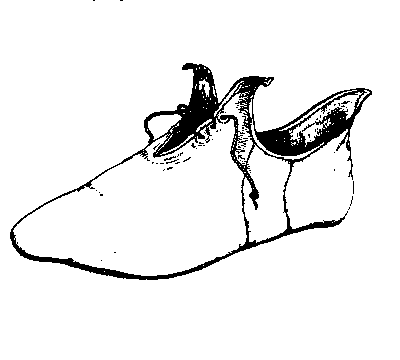
Dokkum, Netherlands. A very fashionably cut shoe with three pairs of lace holes. Late Middle Ages. (Goubitz)
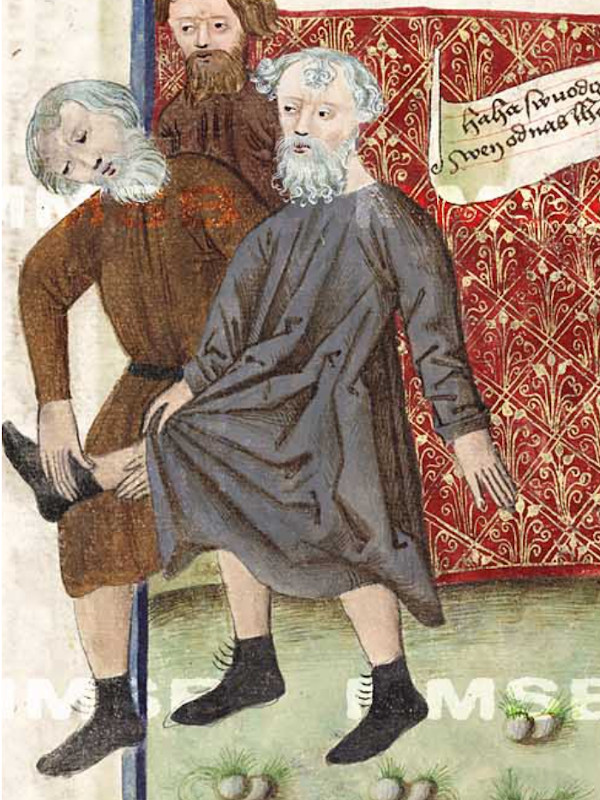
An ankle boot with lace fastening or toggle buttons, excerpt from the Codex of Jena (1490-1510).
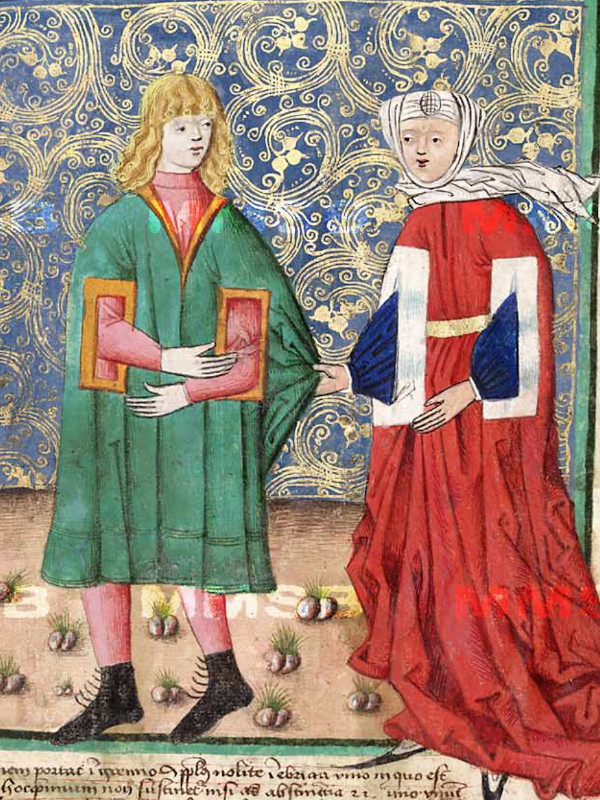
An ankle boot with lace fastening or toggle buttons, excerpt from the Codex of Jena (1490-1510).
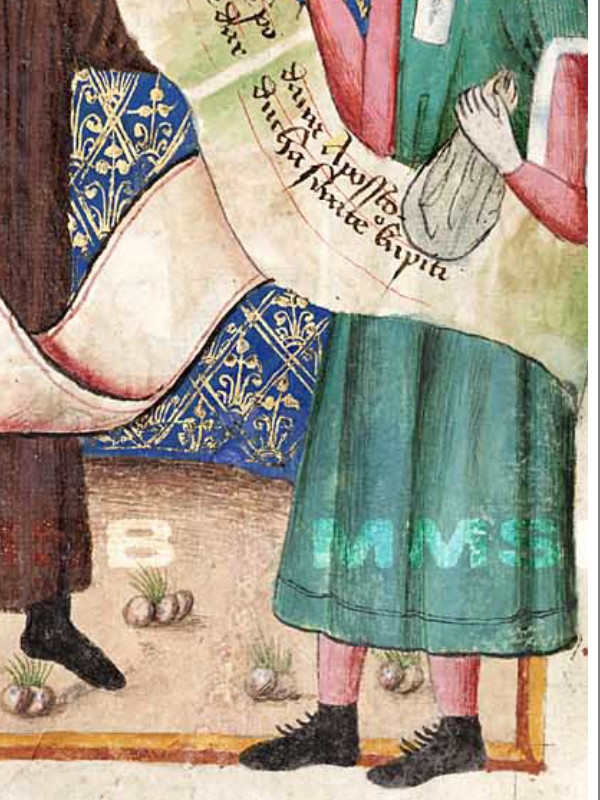
An ankle boot with lace fastening or toggle buttons, excerpt from the Codex of Jena (1490-1510).
Reconstruction
For the reconstruction, ankle boots with a single-lace fastening were chosen, similar to modern shoes, because the requirement was for a robust boot that the owner could wear with plate leg armour (i.e. the part from the ankle upward would be covered by the plate greave) and at the same time undertake long marches in. This type of boot is widely represented in Czech period depictions, see below.
What an ordinary Bohemian shoemaker had to be able to do is stated by the earliest surviving description of a masterpiece, the guild ordinance of the Pardubice shoemakers of 17 December 1515: the candidate “aby vokázal nejprv škorni příční, druhú škorni telecí, od té škorně střevíc zadní, a k tomu také punčoch veliký” (is to show first a příčná boot, secondly a calfskin boot, from that boot a rear shoe, and also a large punčoch) – that is, two kinds of high boots, a low shoe and a leather legging. For that he paid “čtyři groše bílé a libru vosku” (four white groschen and a pound of wax) and laid on a meal for the guild “každý podle svěj možnosti” (each according to his means).
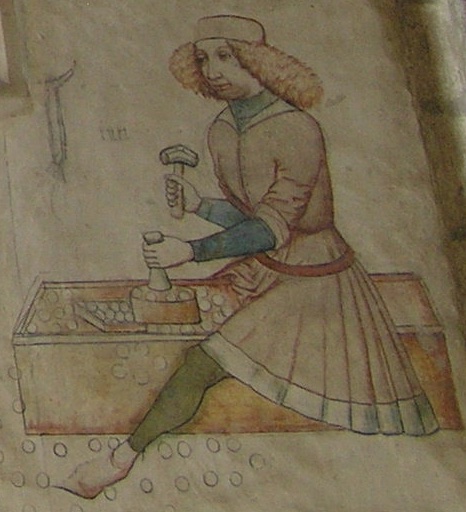
The coin maker. The type of fastening cannot be determined here, but it is evident that the footwear is ankle-height. Excerpt from the fresco in the Mintmaster's Chapel of St. Barbara's Cathedral in Kutná Hora (1460-1470).

The scribe wears dark ankle boots. The type of fastening cannot be determined. Excerpt from the Brno Legal Book of Václav of Jihlava (1446).
An ankle boot with lace fastening or toggle buttons, excerpt from the Codex of Jena (1490-1510).
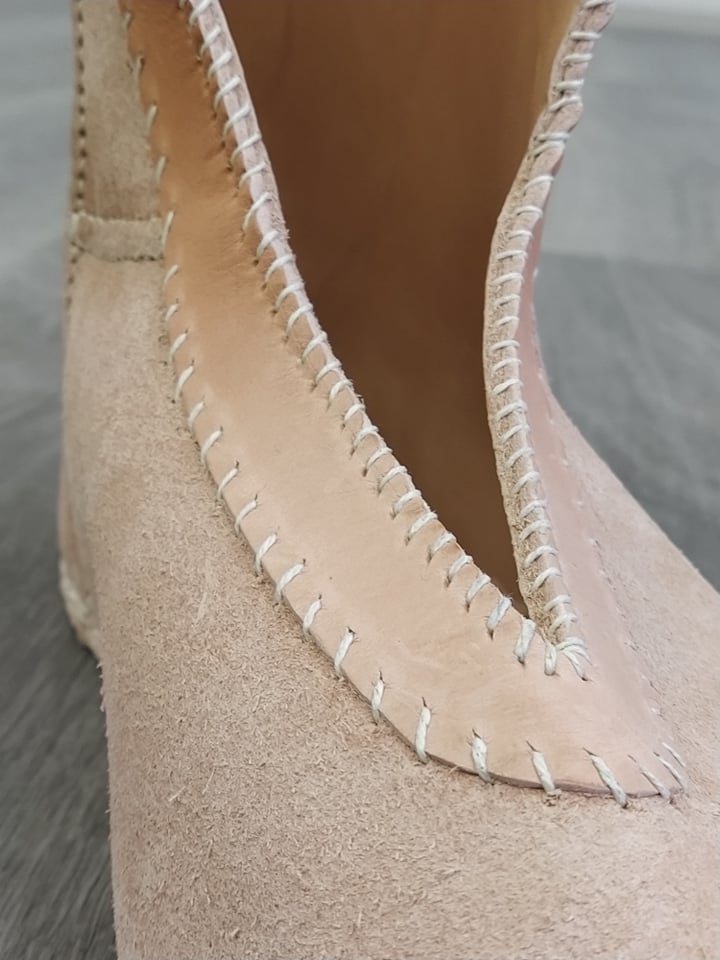
In the construction of the replica, all elements that were used in the construction of shoes in the 15th century were applied, i.e. a binding, a welt and a heel stiffener. The shoe is hand-sewn and subsequently turned so that all stitches are hidden inside. The reconstruction was made by Josef „Halflung“ Novák.
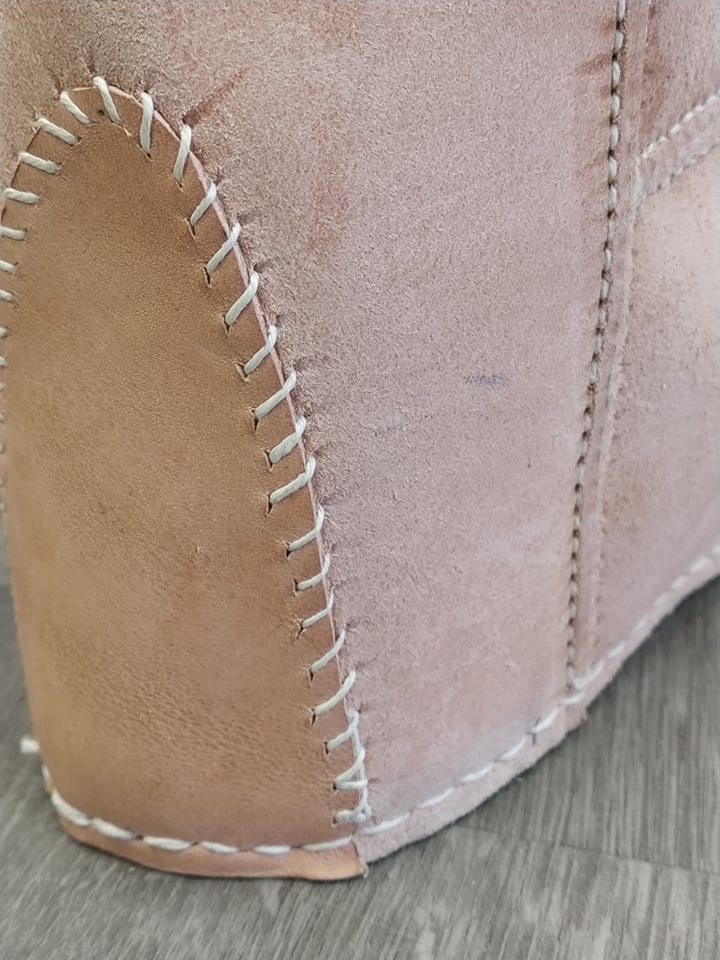
The sewn-on heel stiffener
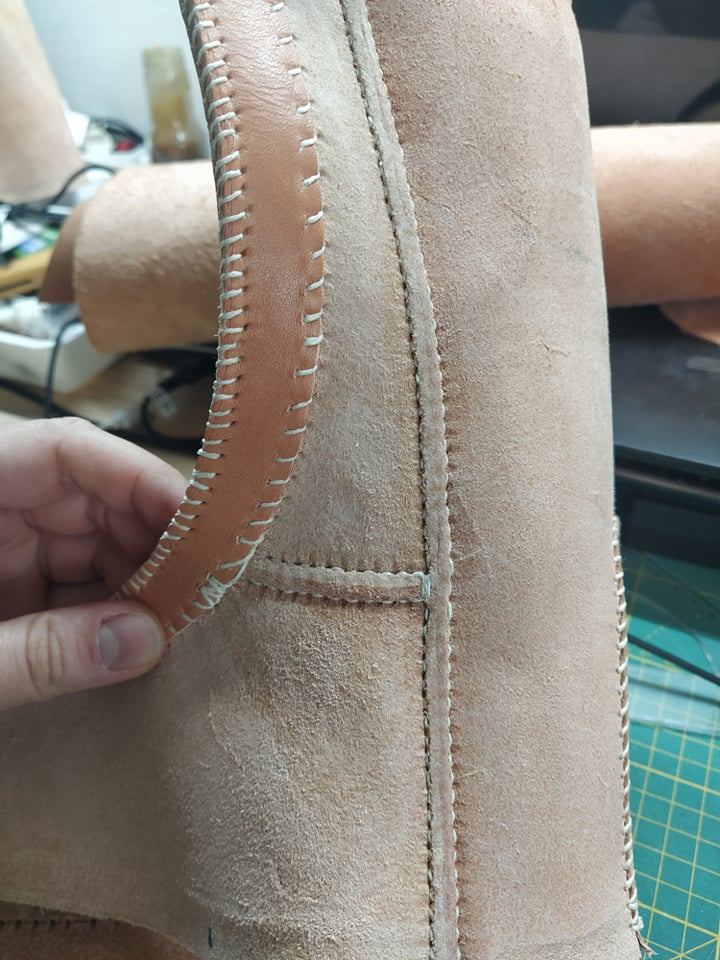
The sewn-on binding
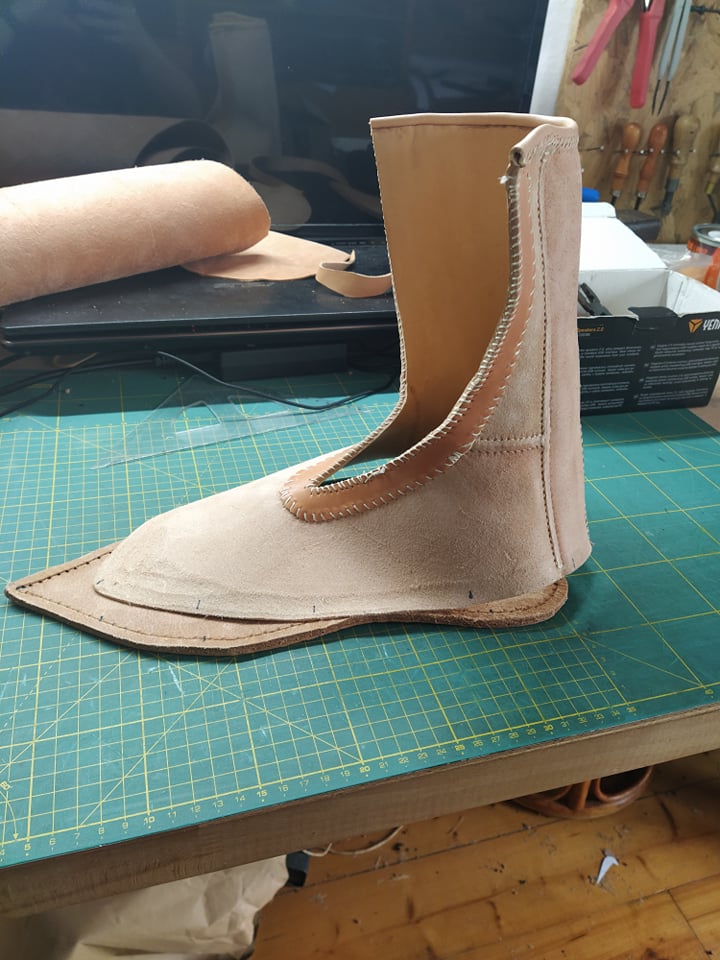
The upper and sole are prepared for sewing
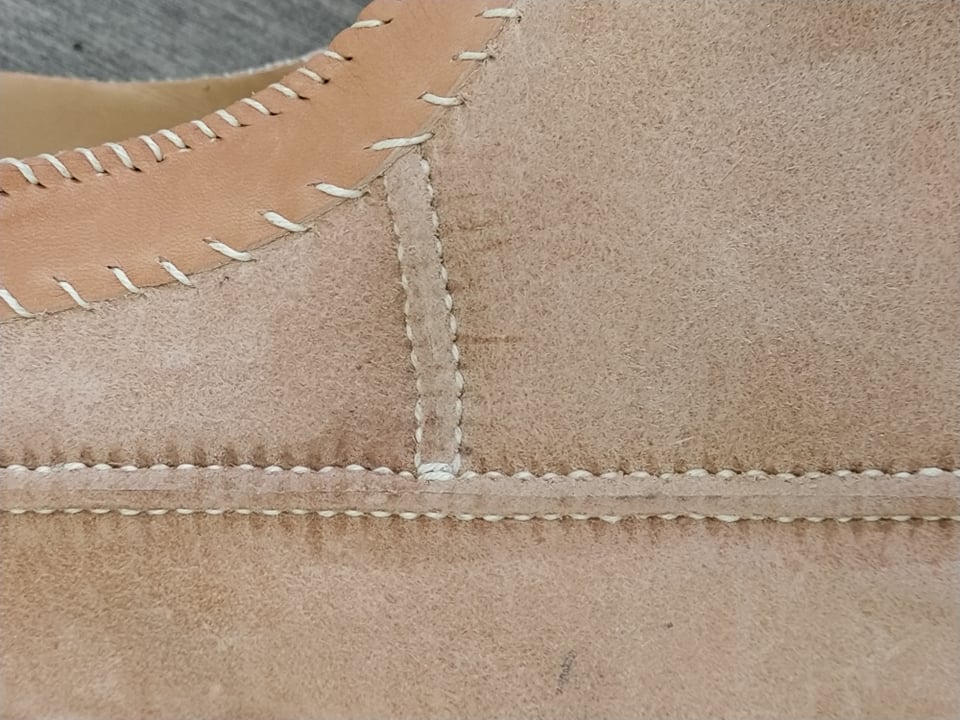
Sewing the upper parts of the boot
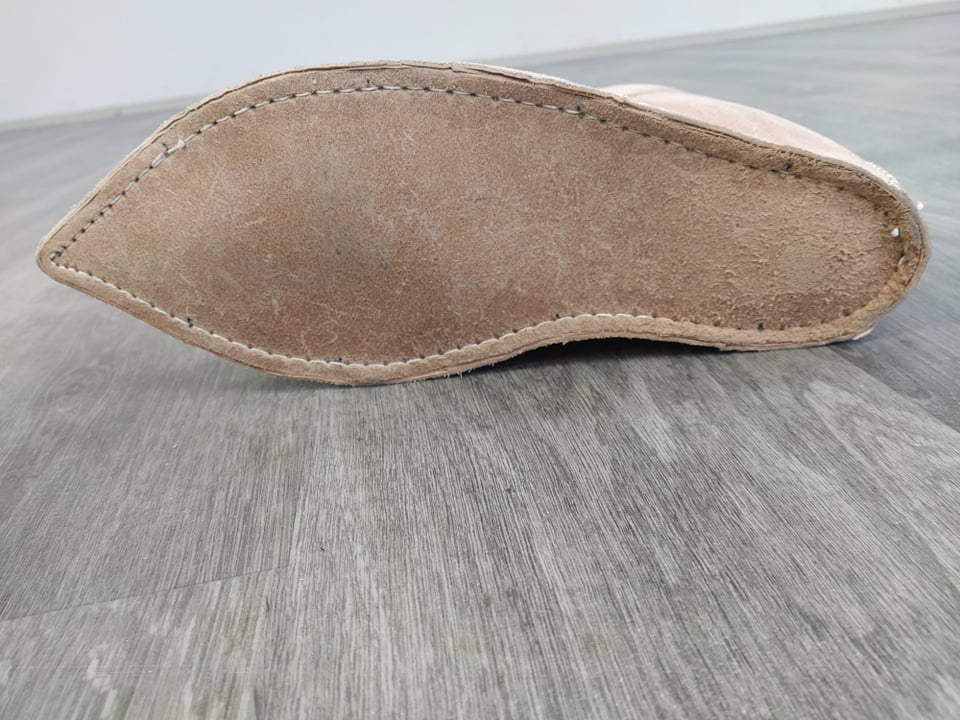
Sewing the sole to the upper
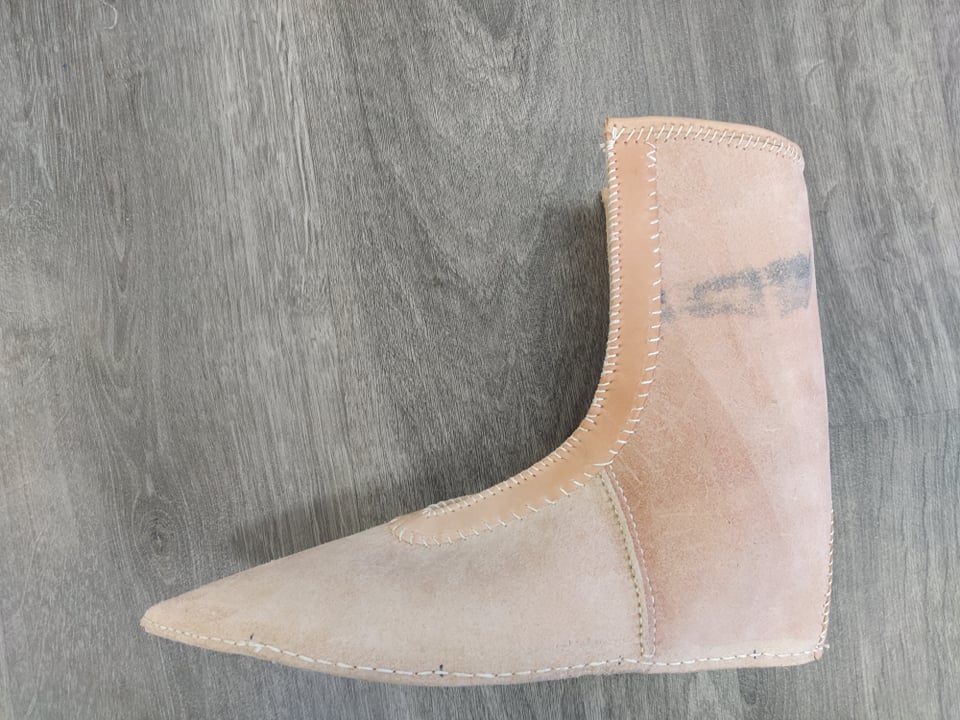
The completely sewn boot
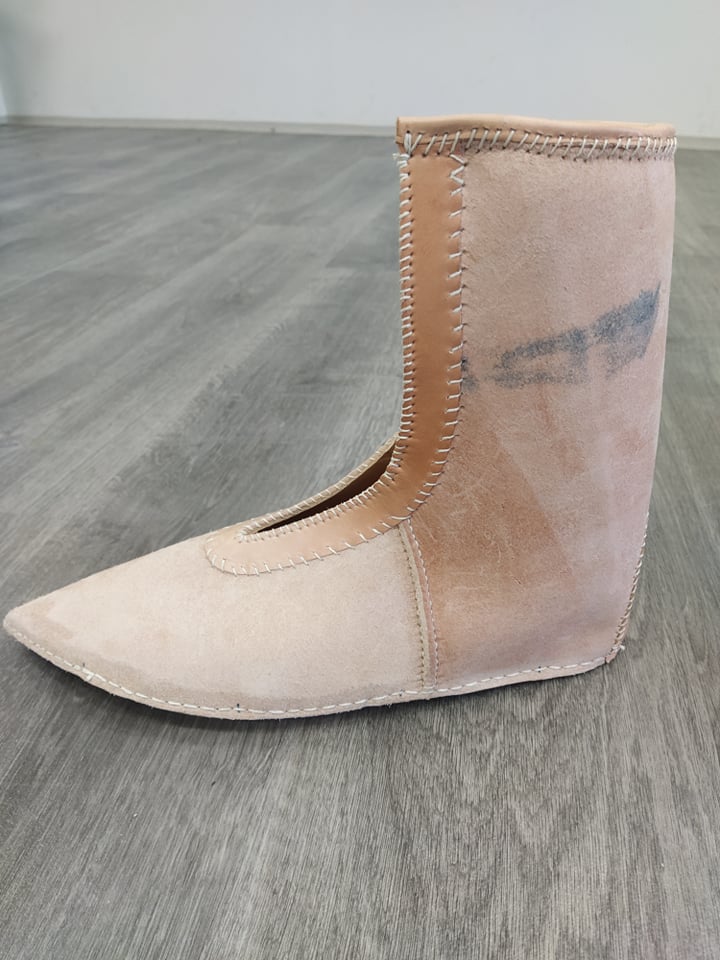
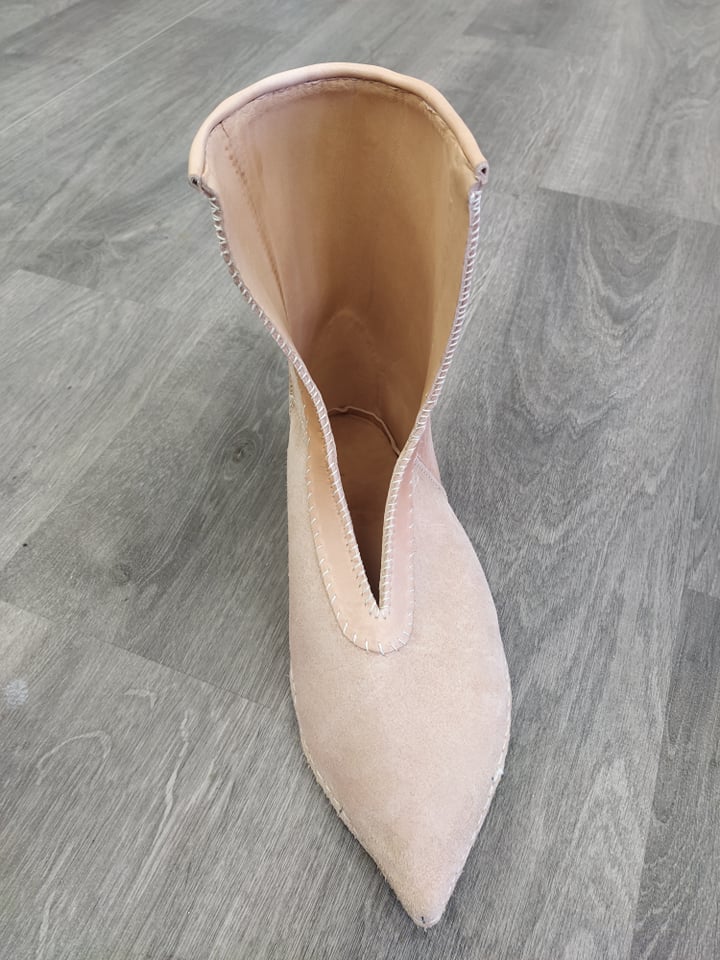
Toggle Buttons
In this type, the fastening slit is at the front on the instep. On one side there are so-called toggle buttons. These are created by tying a knot in a leather lace. This knot then serves as a button and is threaded through the opposing holes. This type of fastening was used in the 14th and 15th centuries and reached its peak between 1350 and 1450.
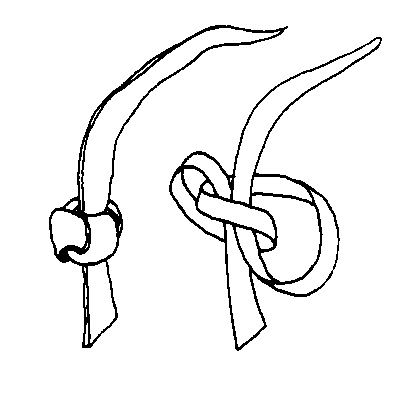
Construction of a toggle button. (Goubitz)
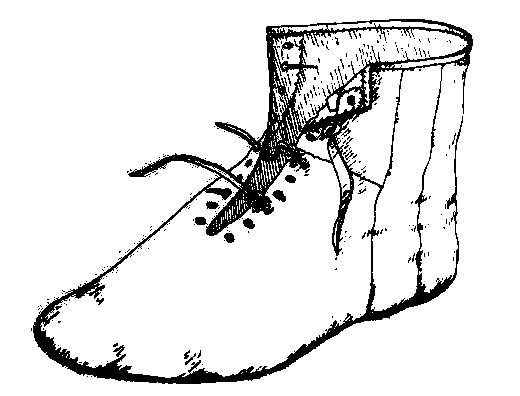
Dordrecht, Netherlands. An ankle boot in which the lace fastening was replaced by three toggle buttons. 14th–15th century. (Goubitz)

Dordrecht, Netherlands. An ankle boot. 14th–15th century. (Goubitz)
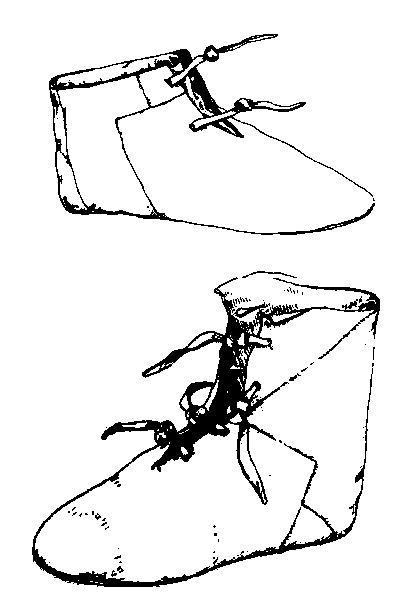
Top: Ghent, Belgium. A boot with two toggle buttons and a tongue. 14th–15th century. (Goubitz)
Bottom: Dordrecht, Netherlands. A children's boot with four toggle buttons. 14th–15th century. (Goubitz)
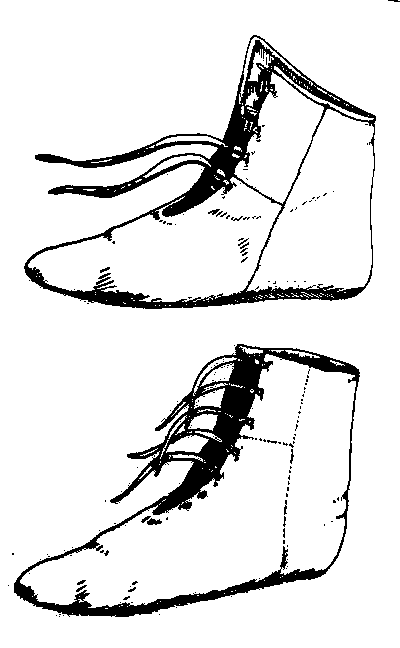
Top: Dordrecht, Netherlands. A boot with two toggle buttons and two rolled buttons. 14th–15th century. (Goubitz)
Bottom: A boot with combined fastening — the first two holes on the instep are tied with a lace, the rest fastened with toggle buttons. 14th–15th century. (Goubitz)
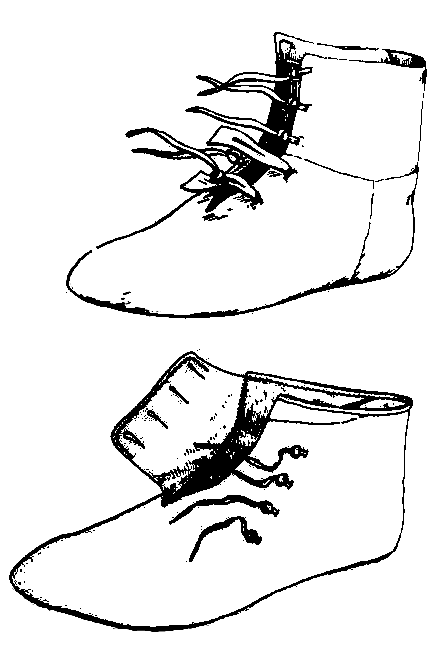
Top: Dordrecht, Netherlands. A boot with straps, one end of which is tied into a toggle button and the other end has a hole for fastening this button. 14th–15th century. (Goubitz)
Bottom: Nijkerk, Netherlands. A boot with a flap fastened with toggle buttons. 14th–15th century. (Goubitz)
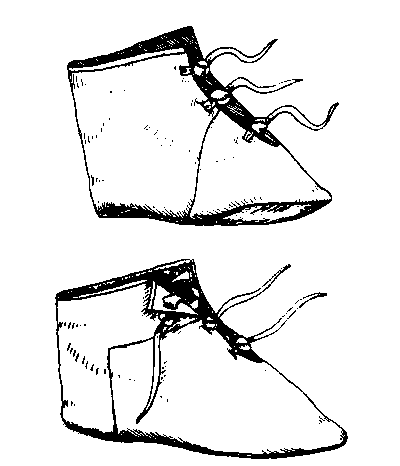
Dordrecht, Netherlands. Children's shoes from the 14th–15th century. (Goubitz)
Top: A child's shoe.
Bottom: A toddler's shoe.
Flap Fastening
It is principally the same as the overlap fastening described above, but the flap is not an integral part of the shoe; rather, it is sewn on additionally. This type of fastening is most commonly found on footwear from the 14th and 15th centuries.

Nijkerk, Netherlands. A boot with a flap fastened with toggle buttons. 14th–15th century. (Goubitz)
Collar Shoes
These shoes have a leather collar instead of a binding. After putting the shoe on, the collar is folded down, which slightly closes the shoe around the ankle. This type of shoe was popular at the turn of the 15th and 16th centuries.
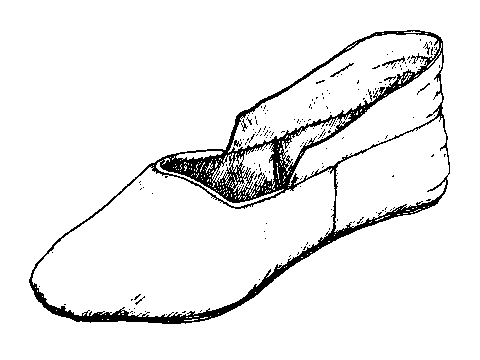
Edam, Netherlands. A shoe with a collar. Around 1480. (Van Heeringen & Meffert 1996)
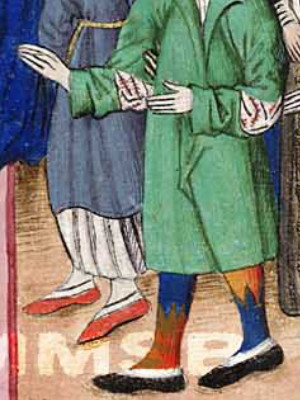
Collar shoes, excerpt from the Codex of Jena (1490-1510).
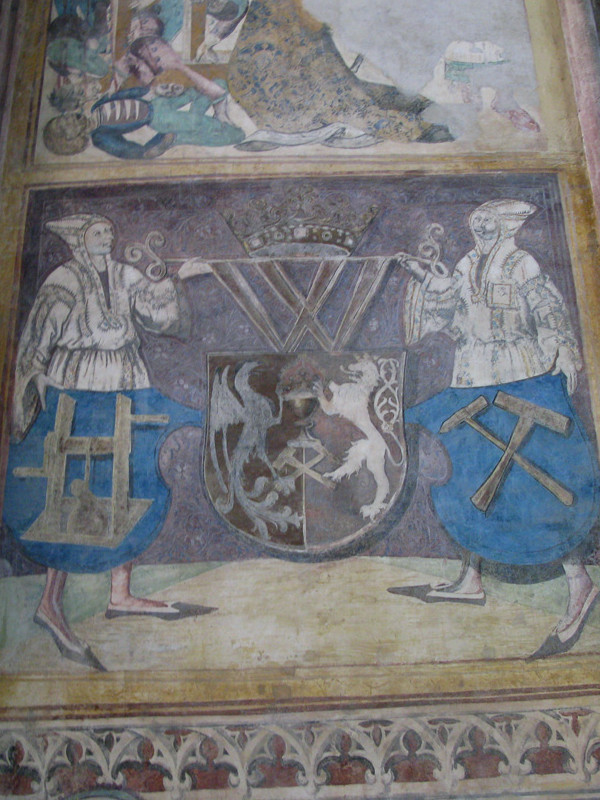
Collar shoes, fresco in the Hašplíř Chapel of St. Barbara's Cathedral in Kutná Hora. (late 15th century)
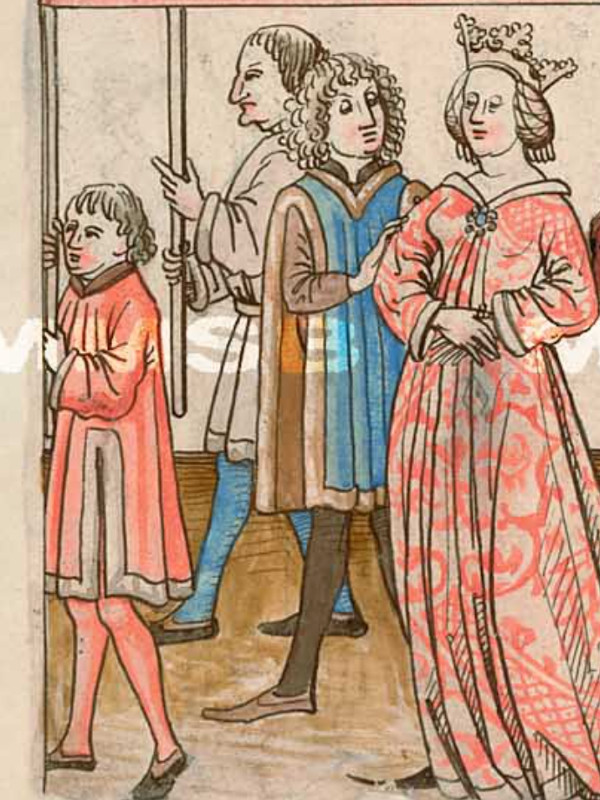
Collar shoes in an excerpt from the Richental Chronicle (1470-1480).
Strap Fastening
A very archaic type of fastening, where the foot above the ankle was wrapped all around with one or more straps. This type can be divided into two subtypes:
- The strap wrapping around the foot runs horizontally and is threaded through several pairs of vertical slits made directly in the upper of the shoe. Used primarily between 600 and 1000 AD.
- The strap wrapping around the foot runs horizontally and is threaded through loops that are created by threading another strap vertically through pairs of horizontal slits in the upper of the shoe. Used primarily between 1000 and 1300 AD.
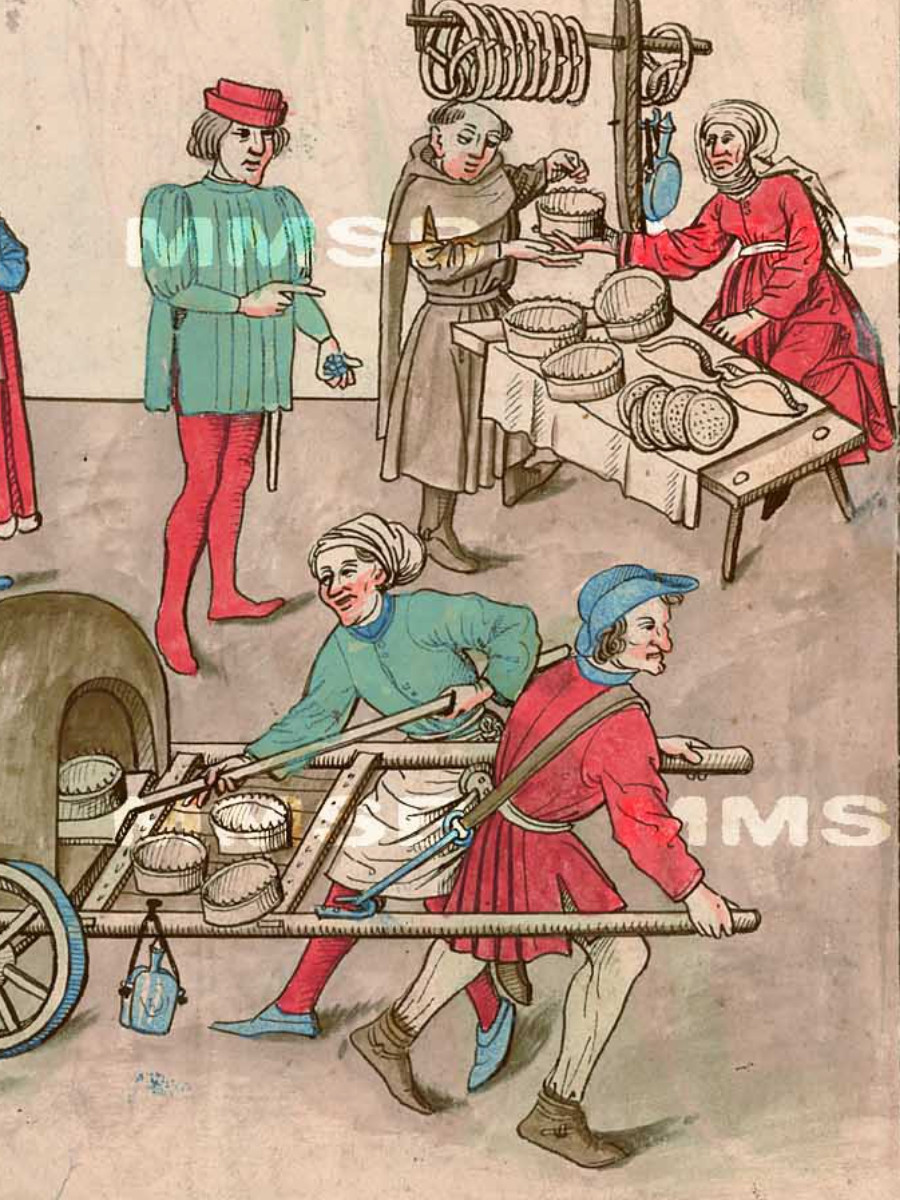
Several types of footwear. From foreground to background:
- Boots with strap fastening wrapped above the ankles.
- Shoes with a fold-down collar.
- Hose with a leather sole.
- Tall riding boots with fold fastening.
Sources:
If you enjoyed this article, please consider making a small financial contribution. Writing articles is very time consuming and we do it in our free time.
IBAN: CZ39 2010 0000 0028 0346 2929
BIC/SWIFT: FIOBCZPPXXX