


Undergarments
Undergarments served several functions. Given that the vast majority of outer garments were made from woolen materials, they prevented the wool from directly chafing against bare skin, which would otherwise cause irritation. Outer garments were also very difficult to clean, as medieval washing employed mechanical methods that damaged the fabric. Therefore, garments could not be cleaned too frequently. Washing undergarments, which were predominantly made of linen, was not as difficult. They absorbed sweat, and if they became soiled, the cost of making another piece for changing was not nearly as expensive as it would have been for a woolen garment.
Men's Shirt
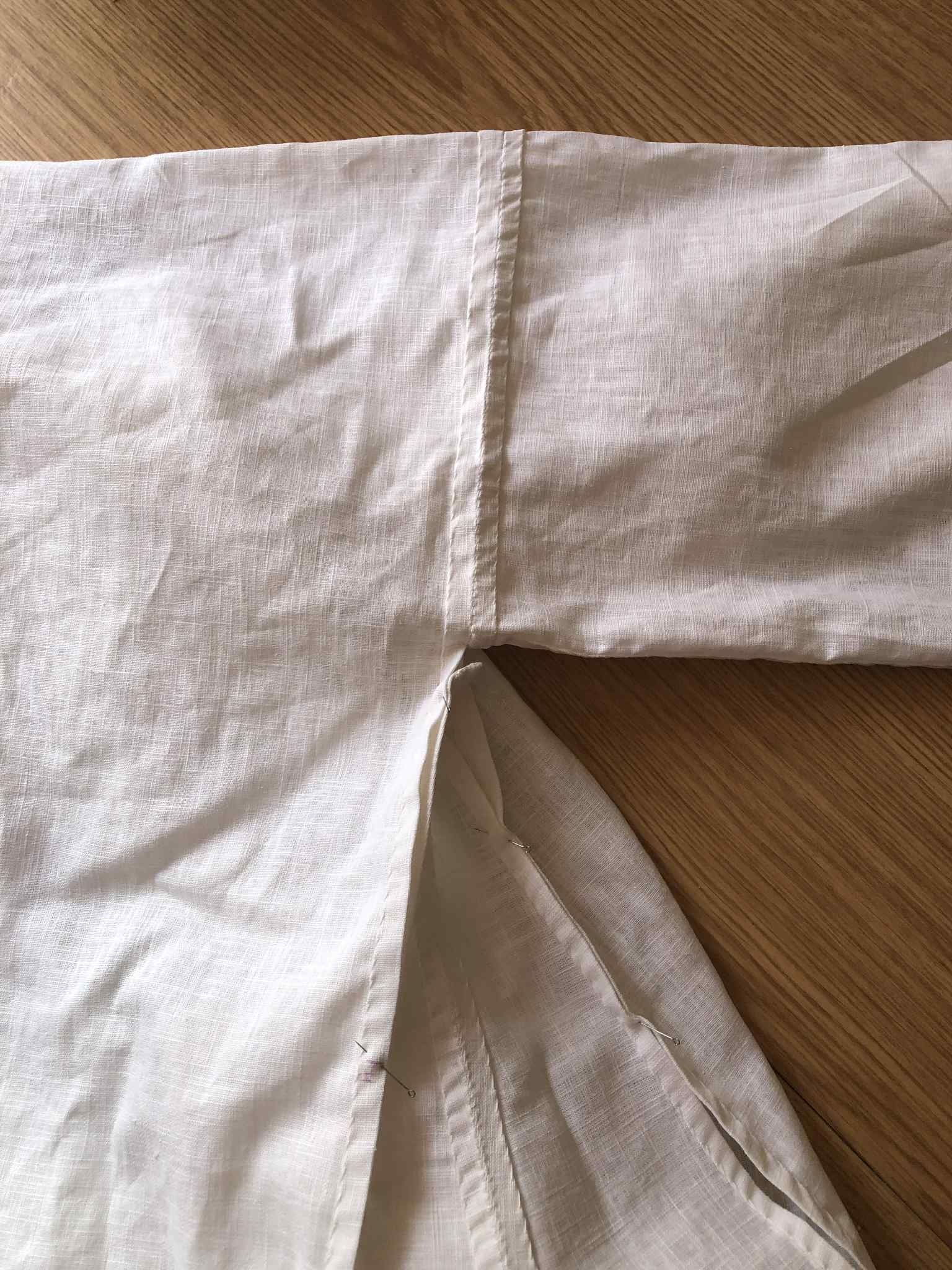
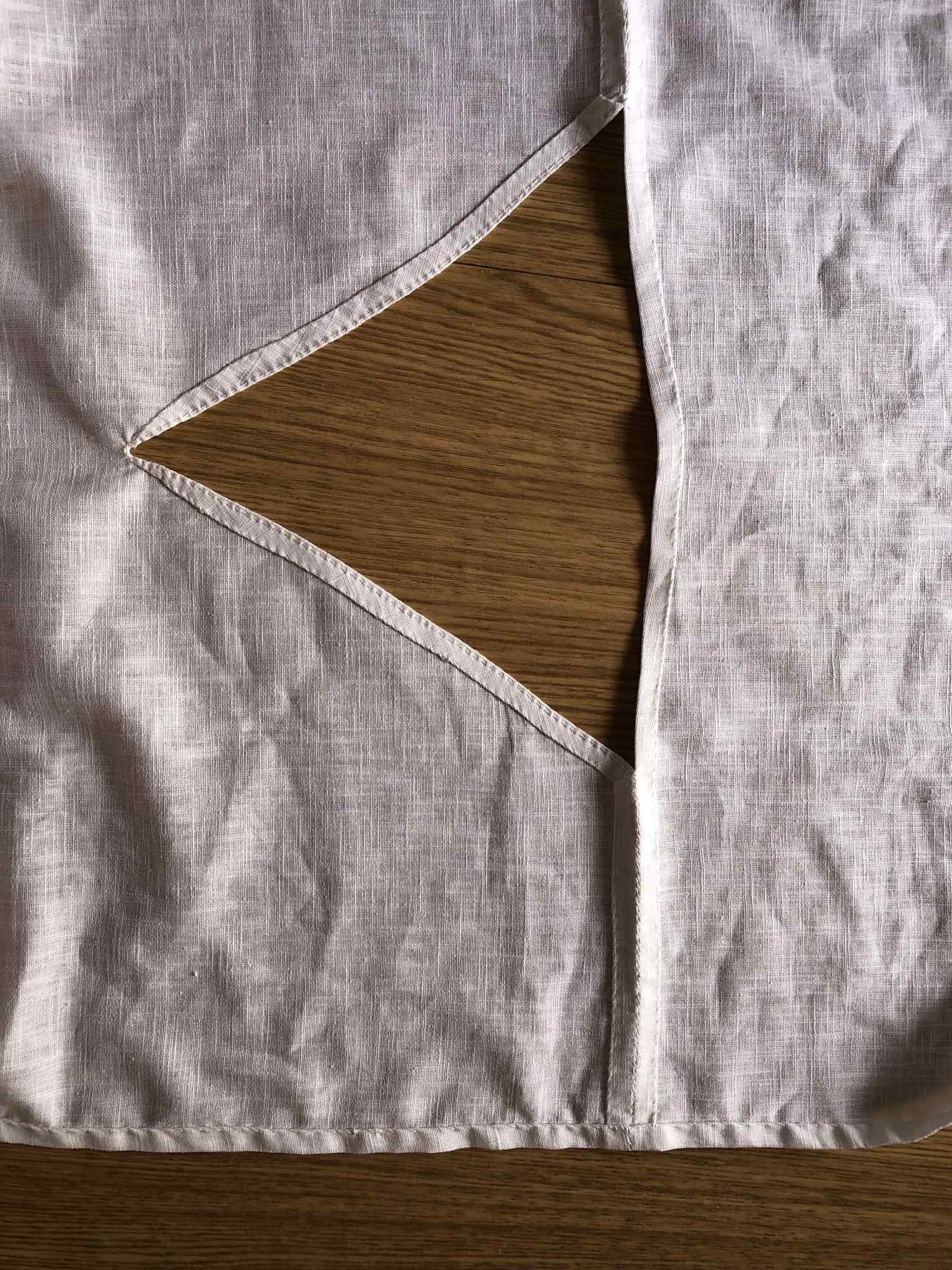
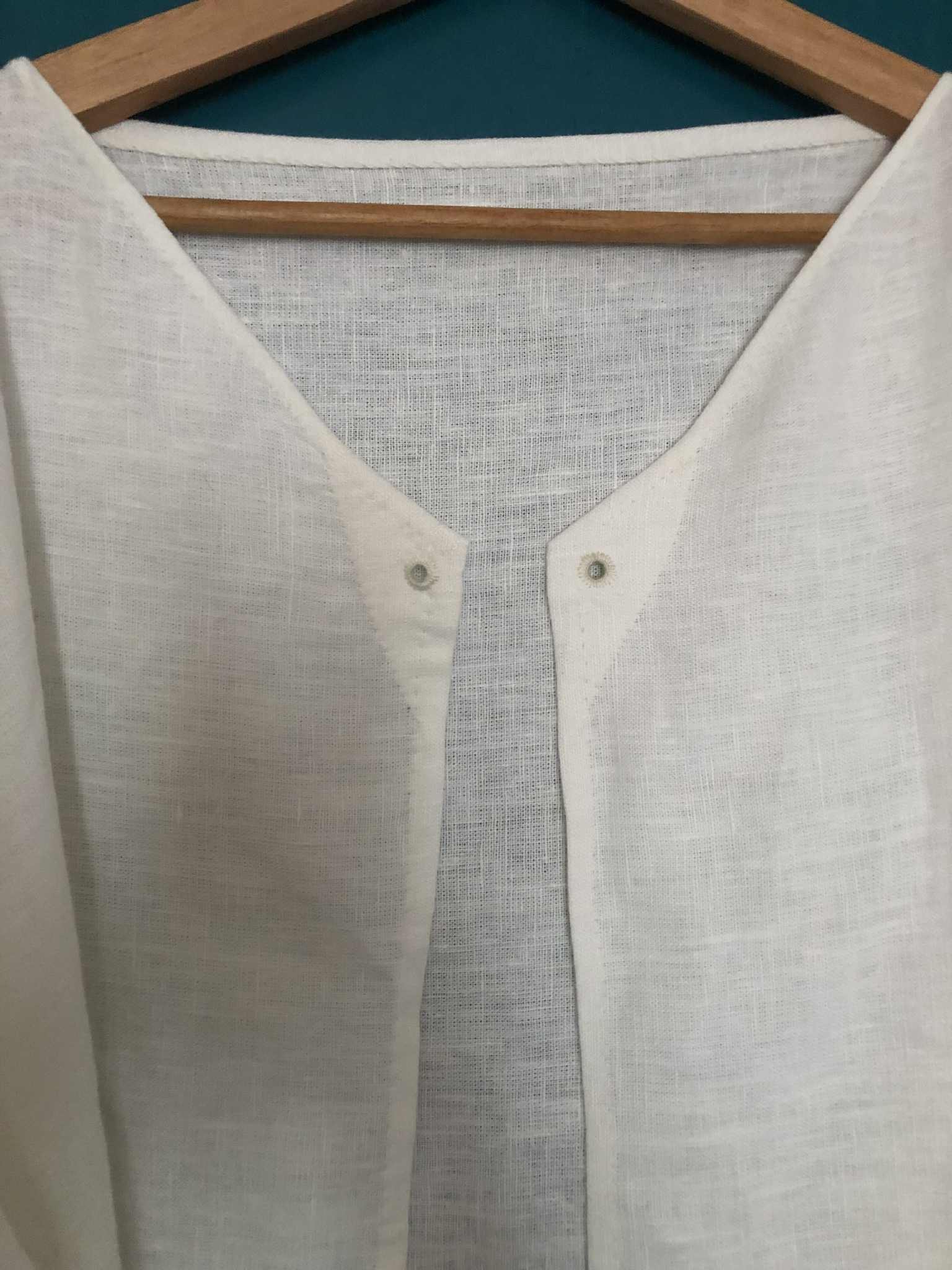
The shirt, called rubáš or rubáč in Old Czech, was the basic piece of men's undergarment. Shirts were of a simple cut, resembling the letter T, and usually reached to the knee area. Shoulder gussets at this time were still made without pleating. The shirt could have a simple oval neckline, a V-shaped opening on the chest, or a slit along its entire length.
It seems that the difference between košile (shirt) and rubáš lay primarily in length, as one inheritance from Litomyšl from 1510 bequeaths “košile tři a rubáč dlouhý” (three shirts and a long rubáš). This would place the rubáš more, though not exclusively, in the women's wardrobe. This is also suggested by other testaments of Litomyšl townswomen: the judge's wife Tisovská had two linen rubáče in 1497; Marta, sister of the burgrave's wife, bequeathed in 1499 „Mandě písařce dva rubáče, jeden žemniový a druhý lněný“ (two rubáče to the scribe Manda, one of hemp and the other of linen). Kateřina, a townswoman from Prague's New Town, bequeathed in 1483 “tři rubáše sváteční a tři košile všední” (three festive rubáše and three everyday shirts).
Undergarments were mostly white or in the natural color of the material, but when we do have evidence of colored undergarments, for some reason they are most often blue. For shirts, this is documented both in writing from the Old Czech Annals, which state that at the Battle of Vyšehrad „čeští a moravští páni byli zbiti a všeho odění a rúcha až do modré košile obnaženi“ (Czech and Moravian lords were slain and stripped of all their clothing and garments down to their blue shirts), and iconographically in the miniatures of the Life of St. Francis from 1500.
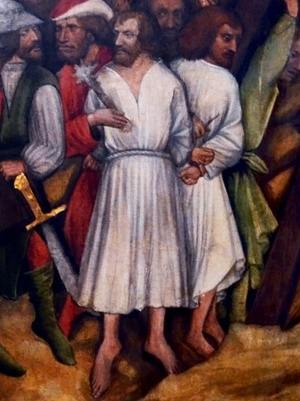
A shirt reaching below the knees with a V-shaped neckline, excerpt from the panel painting Carrying of the Cross on the Rajhrad Altarpiece, around 1440.
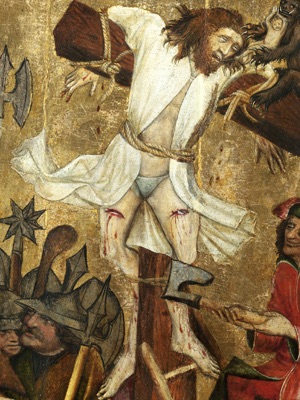
A shirt reaching to the knees with a full-length slit and short slip-cut braies, excerpt from the panel painting Crucifixion from Nové Sady on the Rajhrad Altarpiece, around 1440.
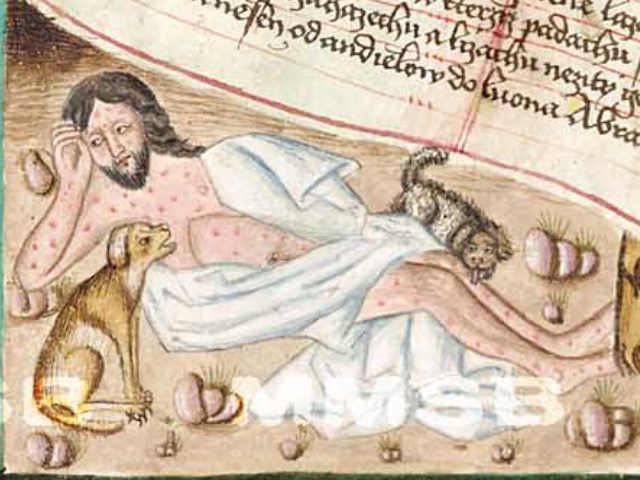
Lazarus in a shirt with a full-length slit, excerpt from the Codex of Jena (1490-1510).
Reconstruction
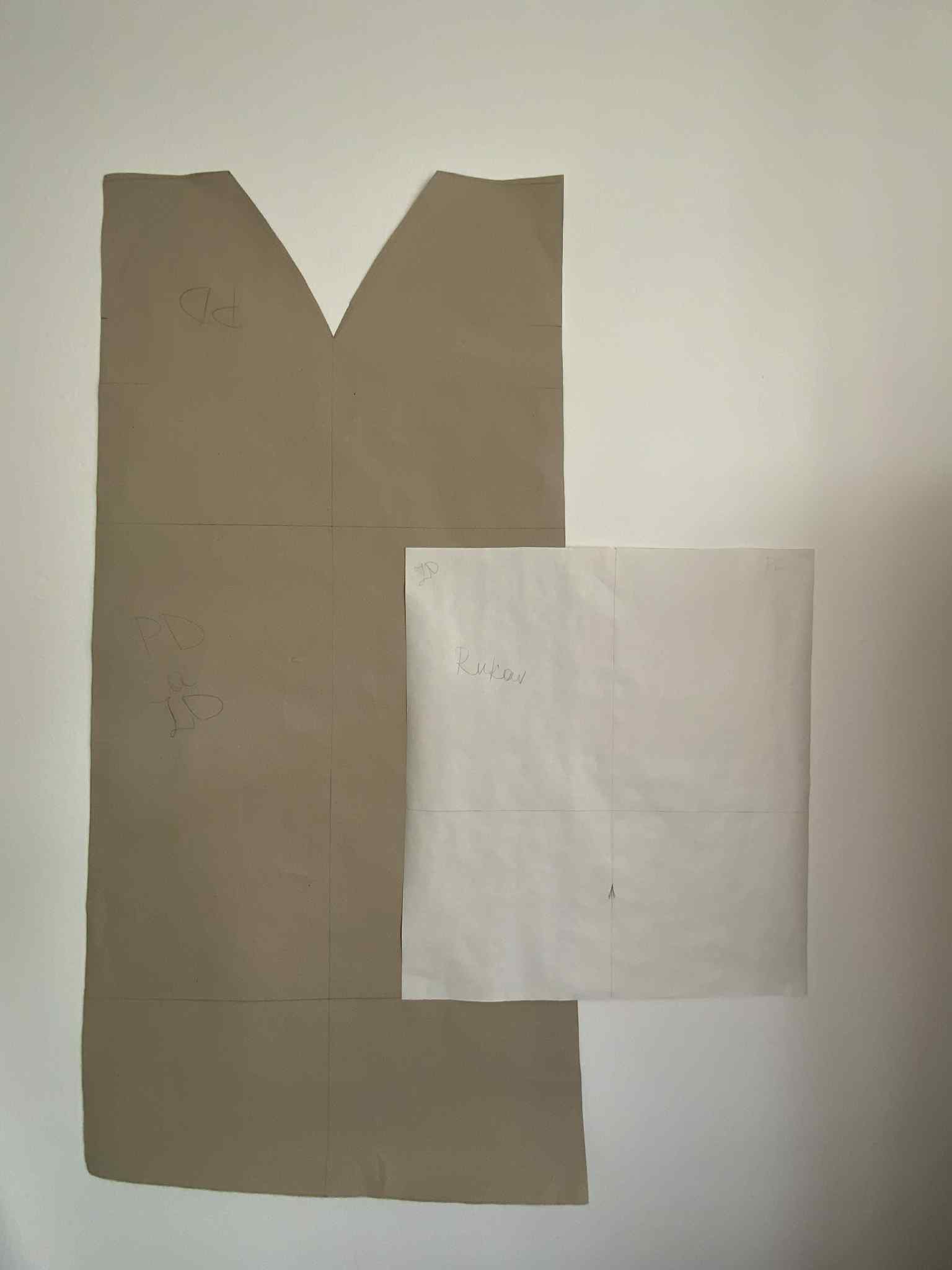
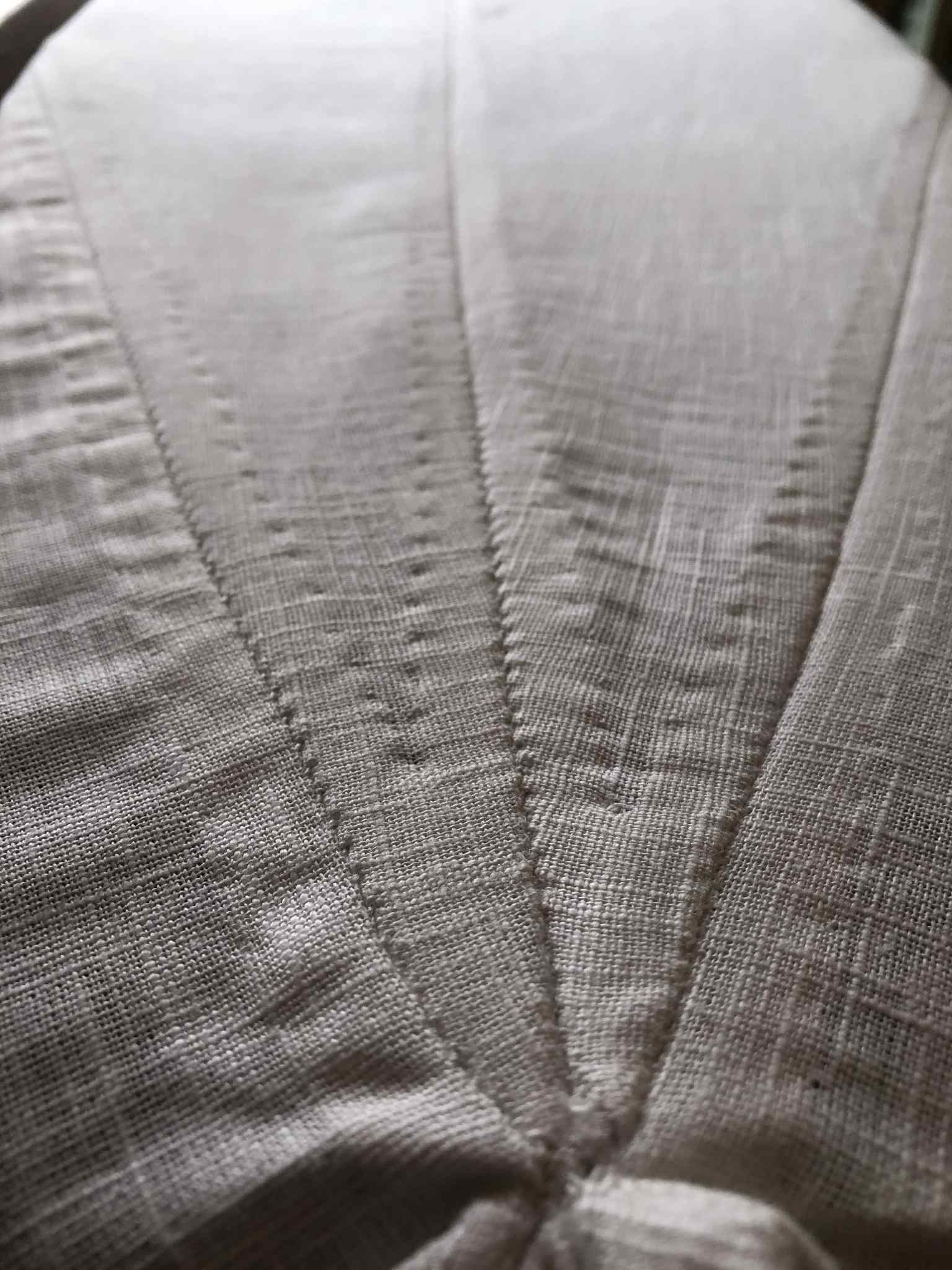
For the reconstruction, we chose the shirt from the panel painting Crucifixion from Nové Sady on the Rajhrad Altarpiece. One was left with a slit as shown in the original, while the other was reconstructed without a slit. Both shirts are hand-sewn from fine linen cloth. The reconstruction was made by Daria Litvinova.
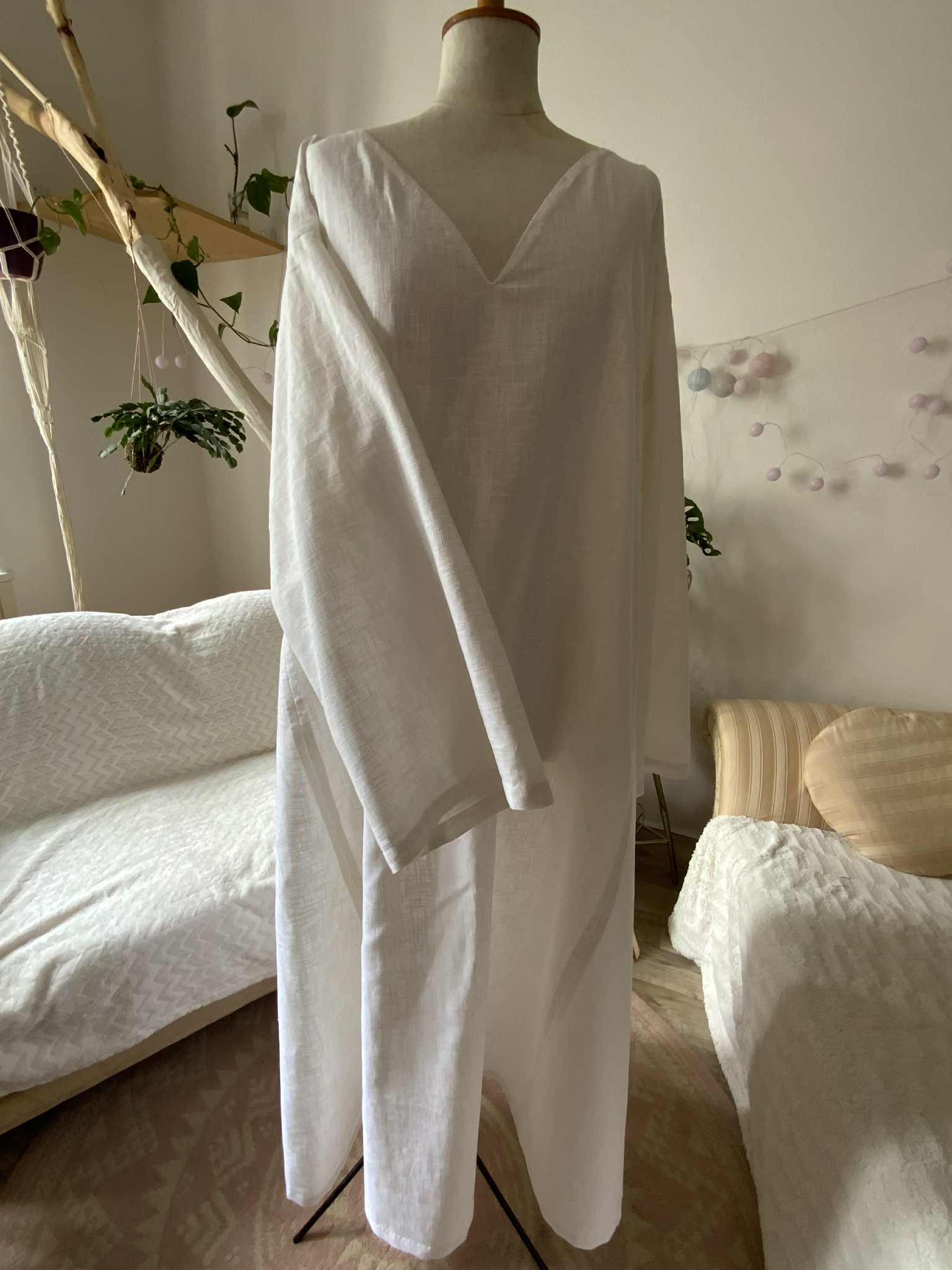
Women's Chemise
Compared to men's undergarments, there is considerably less evidence of their female counterparts. Women wore simple long chemises with shoulder straps under their outer clothes. We encounter them most frequently in illuminations depicting bath attendants, who even wore them as work clothing, and working women are also depicted in them. Furthermore, they can be found in intimate scenes depicting bedroom interiors. One of the oldest archaeological finds of a women's chemise dates to the 14th century from Ranis Castle in Germany.This chemise is sewn from two panels, front and back. Another type consists of three panels. The first two essentially form the front and back bodice, while the third is inserted at the waist to form a pleated skirt. At the side, this type of chemise had lacing for a better fit, later the bodice cut could be extended to include breast cups, as is evident from four finds from Lengberg Castle in East Tyrol, dated to the 1480s.
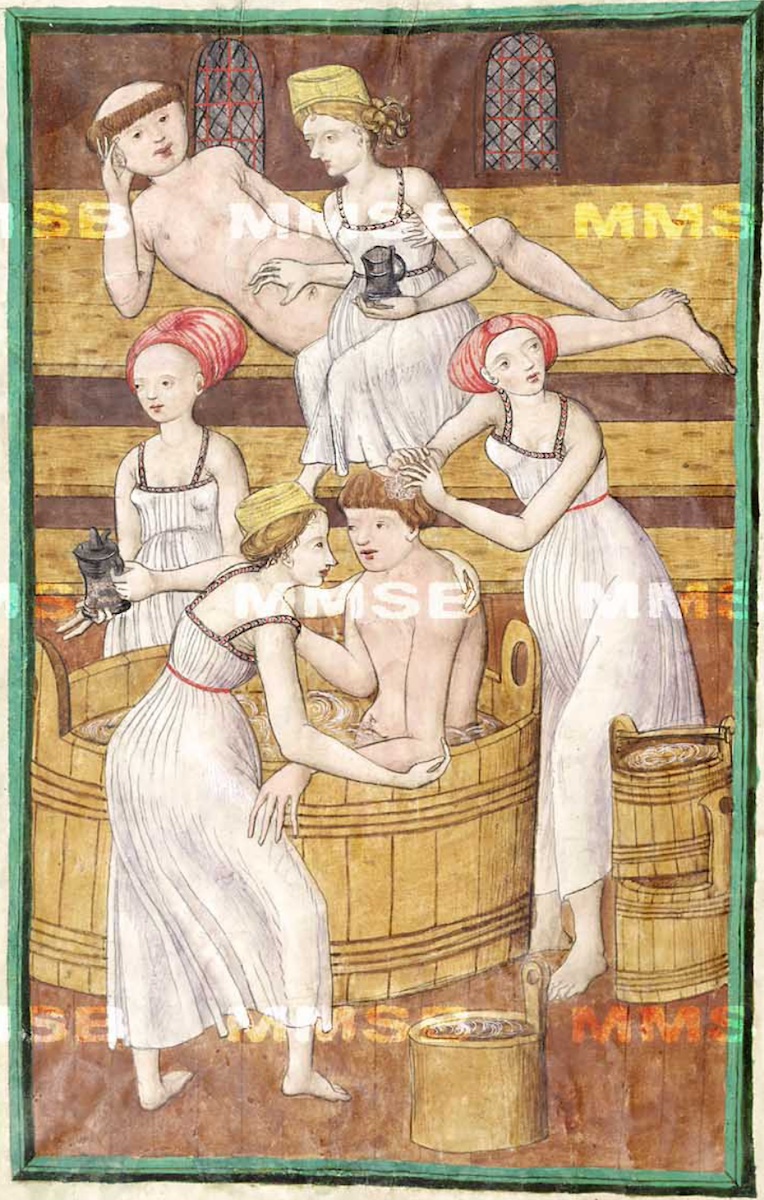
Bath attendants in chemises, Codex of Jena, 1490-1510.
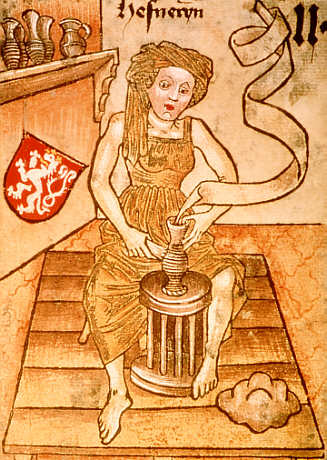
A Czech potter in a chemise at work, a playing card from the Hofämterspiel deck commissioned by Ladislaus Posthumus, 1450s.
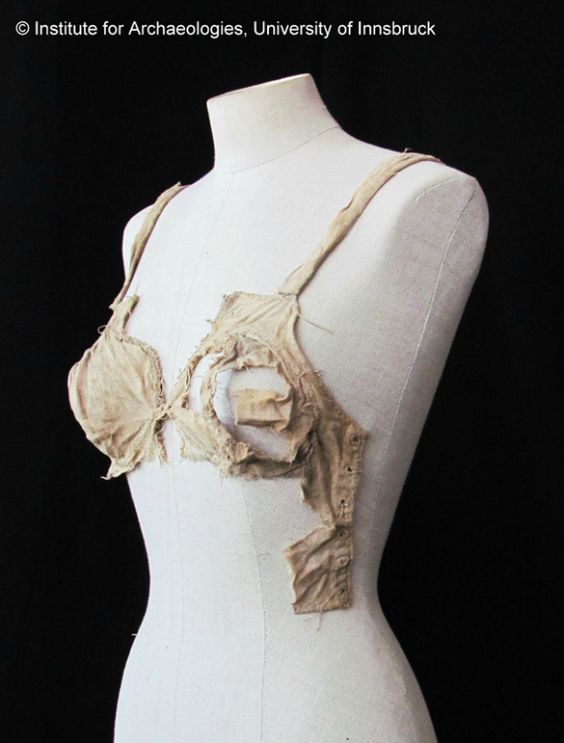
A chemise find from Lengberg Castle in East Tyrol with breast cups, 1470s-1480s.
Braies
The second basic piece of men's undergarment were braies, in Old Czech known as hace (before the loss of jotation in the 14th century pronounced hácě), also found in records as hacze, Old Czech rúšce, Latin bragas or bracca. In earlier times, they reached to or below the knees. These longer braies gradually disappeared and after the mid-15th century are no longer encountered.
Later, braies were referred to in written sources more often by the new Latin neologism femoralia, literally translated as nábedrnie (thigh coverings). This is also what Vavřinec of Březová calls them in his chronicle, when describing the Battle of Vyšehrad. After the battle, fallen knights were reportedly stripped of their armour until they were left wearing only braies: “... baronibus et militibus sunt velut porci crudeliter interempti et statim omnibus armis et vestibus usque femoralia denudaci.”
Braies were made of thin linen cloth, as evidenced by the Kladruby Bible of 1471: “Učiníš i rúčce lněné, aby přikryly mrzkosti tvé od ledví až po bedr.” The simplest type consisted of a more or less shaped strip of fabric that passed between the legs and was held in place at the sides by a cord that was tied on one or both sides. Such braies are known both from various period depictions and from archaeological finds at Lengberg Castle in East Tyrol. Another variant could have a cut where the cord at the sides was replaced by a channel with a drawstring, whose ends were brought out at the front. When pulled and tied, a sort of pouch for the genitals was formed at the front of the braies. While older braies (with short legs) are found in depictions only in white, the slip-cut braies can also be found in blue or even black depictions.
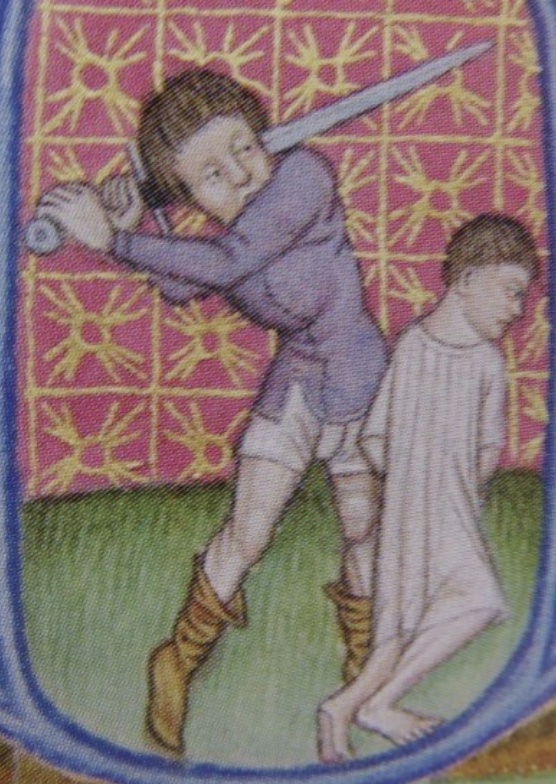
Braies (still with short legs), Brno Legal Book of Václav of Jihlava, 1446.
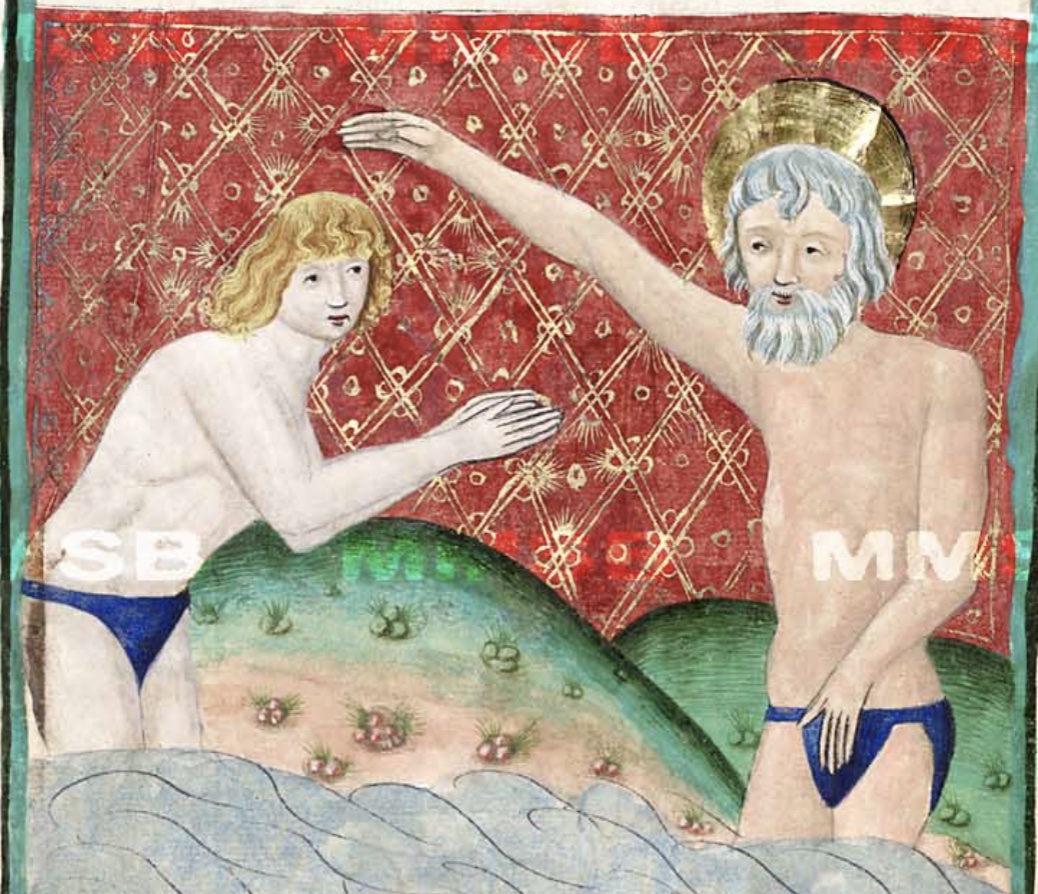
Baptism scene where the figures are wearing blue slip-cut braies. Codex of Jena (1490-1510).
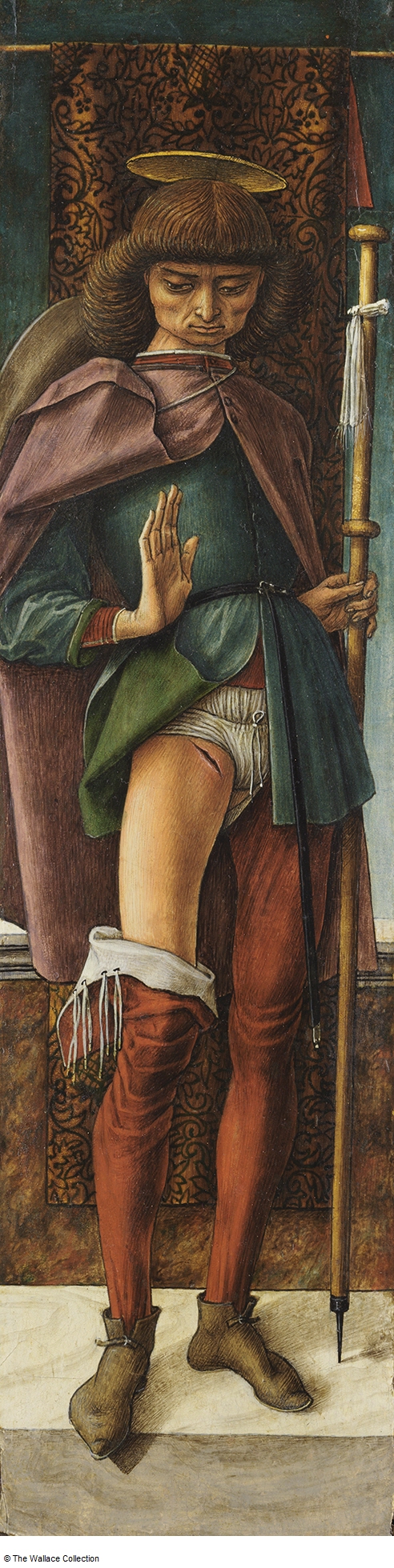
On the painting of St. Roch from 1480, of Italian provenance, it is visible that slip-cut braies were practically identical throughout Europe at the time. In this case, it is the second type with a drawstring tied in the middle.
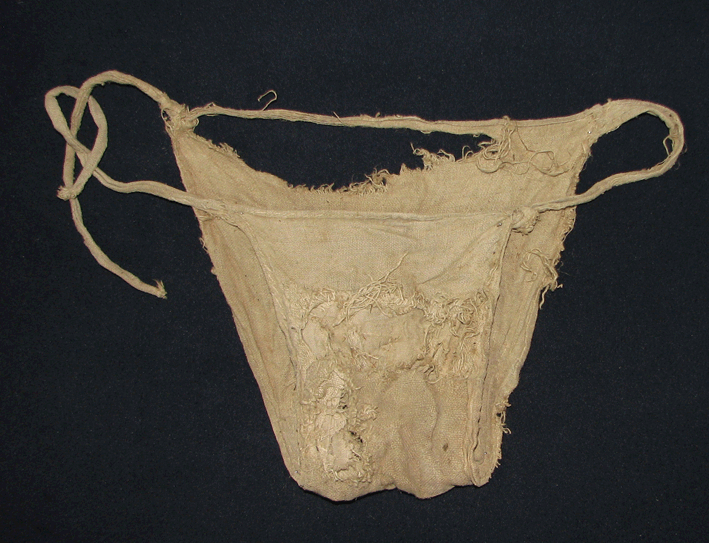
Braies from Lengberg Castle in East Tyrol, dated to the 1480s.
Various types of braies in the engraving “Boj o kalhoty” (Fight for the Trousers) by Monogrammist E.S., Germany, 1440-1467.
While for a man in the 15th century it was considered a grave insult to “bez hacz choditi” (go without braies), whether women also wore braies (femoralia) is currently the subject of a lively debate, sparked by the aforementioned textile finds at Lengberg Castle. It is not possible to clearly prove whether the above-mentioned and depicted braies belonged to a man or a woman. However, it is interesting that for the Czech context, they are documented by name as early as 1455 in the Clementinum Dictionary, specifically as their feminine variant feminale.For the Italian context, braies for women are securely documented at the turn of the 16th and 17th centuries.
Both braies and shirts were considered intimate garments that were improper to show in public. The gradual revealing of the shirt began in the second half of the 15th century in connection with the penetration of Renaissance fashion through Germany, but for example in the moralistic Codex of Jena, visible parts of the shirt appear only on figures who are in some way sinful.
Sources:
If you enjoyed this article, please consider making a small financial contribution. Writing articles is very time consuming and we do it in our free time.
IBAN: CZ39 2010 0000 0028 0346 2929
BIC/SWIFT: FIOBCZPPXXX